1. A popular variety show crew took on the Médoc Marathon course, blending festival joy with a serious race challenge.
2. Eunji Lee, a beginner runner, completed her first half marathon (21.0975 km), overcoming pain and the urge to quit.
3. Team support — a pacemaker, encouragement, and shared purpose — proved decisive in moments of crisis.
4. The story becomes a parable of endurance, faithfulness, and mutual care rather than mere competition.
5. As a church we can learn practical ways to run our spiritual race together: steady pace, companionship, and grace.
Brothers and sisters, today we will reflect on a simple, modern story: a team of friends on a televised challenge in the French Médoc vineyards, and especially the quiet courage of a novice who crossed the half-marathon finish line for the first time. Though the broadcast is not a religious program, the human drama—fear, help, determination, and tenderness—speaks directly to the gospel rhythm of bearing one another and running with endurance. Let us listen for the lessons God gives in the ordinary grit of a long run.
The Starting Line: Step into the Unknown
The crew left the village full of nerves and laughter: Kian84 setting a competitive pace, Kwon Hwa-woon volunteering to pace, Tsuki joking along, and Eunji Lee stepping onto the course as a beginner. For many of us, beginning something difficult evokes that same mixture of excitement and apprehension. The starting line is a place of posture—how we stand, who we stand with, and what we carry into motion. In a spiritual life, our verses of prayer, our companions, and our small preparations matter more than theatrical bravado. A novice runner can outlast a boastful sprinter when the race stretches long.
- Notice the small preparations: a steady breathing pattern, simple fueling, and quiet encouragement from a teammate.
- Observe the posture of the heart: humility to ask for help, patience with a slow pace, and gratitude for small milestones.
When Weariness Comes: Facing the Midcourse Crisis
About halfway through the route, Eunji felt the familiar enemies of any long effort—thirst, aching muscles, and the whisper to stop. In that moment she thought of her friends on the course, imagined them continuing, and found the will to stand and step again. We call it a "runner's high" sometimes, but to the believer it looks like grace meeting grit: a sudden clarity, a neighbor's smile, a child's offering of a cup. Such sequences remind us that perseverance is rarely a private feat; it is shaped by memory, imagination of others, and the small mercies arranged along the way.
- Names can carry us: thinking of someone we love or who loves us feeds courage.
- Small signs of kindness—handing a cup, a shout of encouragement—renew strength.
Pace, Team, and the Gift of Companionship
One runner chased records and found himself wounded by overexertion; another embraced a steady pace and became the team's anchor. Kwon Hwa-woon took the role of pacemaker—practical, patient, attentive—reminding us that leadership in the church often looks like holding rhythms rather than winning applause. Teamwork in the race provided both literal pacing and emotional ballast. The story shows that a community that learns to read each other's signals—who needs a word, who needs silence, who needs a shared joke—can help fragile runners become finishers.
- Pace-setting is an act of love: not everyone runs at the same speed, but everyone can be kept company.
- Practical help—handing water, adjusting a shoe, slowing one’s own tempo—translates to spiritual care.
The Finish Line: More Than a Medal
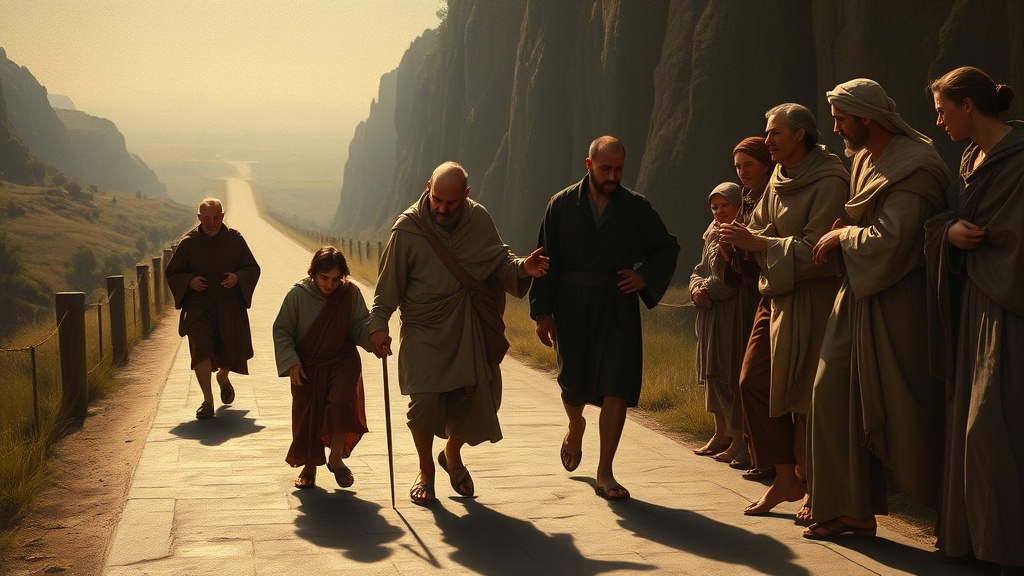
Crossing the tape was not merely a matter of record or ratings; it was a quiet victory shaped by tiny acts of faith and care. Eunji's first half-marathon finish is emblematic of many spiritual finishes: there is relief, a flush of joy, and then a soft wondering at how the ordinary company of others made the extraordinary possible. The finish line often reveals what grace and perseverance have been quietly building together. We are reminded that the church celebrates not only our high achievers but the first-timers and the steady steppers who discover their own strength inside a community.
- Celebrate the small wins: first prayers answered, first steps of reconciliation, first Sunday back after illness.
- Teach younger or newer members to value accompaniment over applause.

Practices for the Journey: Simple Steps for the Long Run
What practical habits help a congregation become a team that finishes well? First, teach and model steady pace—disciplines that are sustainable rather than spectacular. Second, cultivate small networks of care so that when fatigue comes, there is someone ready to offer water, a word, or a prayer. Third, celebrate every first: a return to worship, a shared confession, a healed relationship. These practices form a culture in which endurance is learned and passed on. They translate the televised scene of a half-marathon into our own lives of faith.
- Set realistic rhythms: a short daily devotion, a weekly check-in, and a monthly hospitality meal.
- Create a 'pace partner' system for those facing a season of weakness or transition.
- Regularly name and celebrate firsts and renewed commitments.
