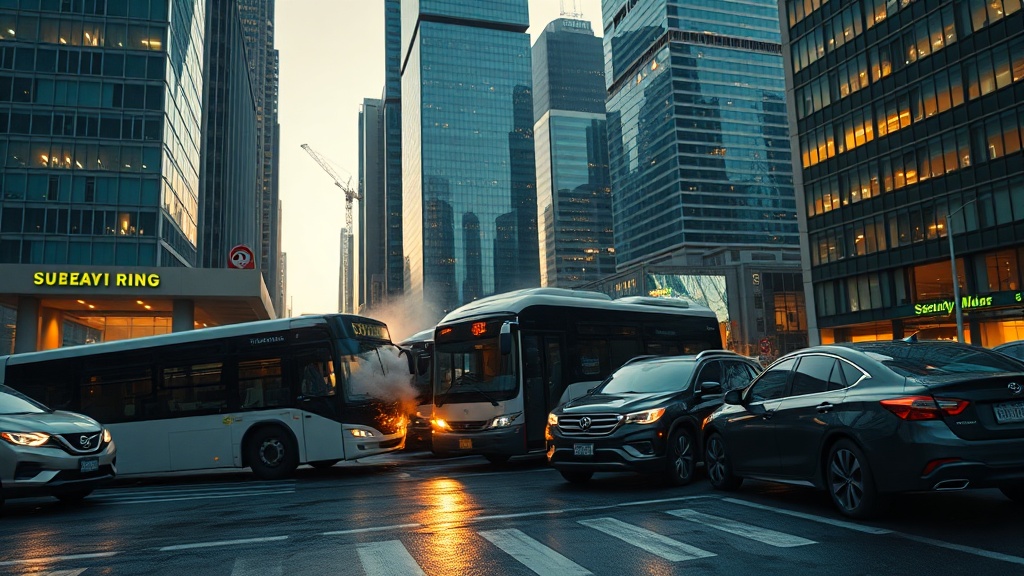
Summary 1. On December 19, 2025, around 17:30–17:40, a multi-vehicle chain collision occurred near Gangnam-gu Office Station (Line 7) intersection in Gangnam District, Seoul, involving ten vehicles and a city bus.
Summary 2. Six people were reported with minor injuries and taken to nearby hospitals; initial reports varied in numbers during early reporting.
Summary 3. Police confirmed the bus driver was not under the influence of alcohol and continued investigations including drug and health checks.
Summary 4. The crash highlights the heightened risk of rear-end chain collisions during evening rush hour and the broad impact when public buses are involved.
Summary 5. Pastoral response can focus on neighborly care, practical preparedness, and community safety measures without politicizing the event.
A Sudden Evening: The Scene and the People
On a late winter evening in central Seoul, a routine moment turned perilous. A city bus struck a line of stopped cars and SUVs near the intersection by Gangnam-gu Office Station, causing a ten-vehicle chain collision. Emergency services arrived; six people were treated for minor injuries and transported to nearby hospitals. In the space of a few heartbeats ordinary travel became crisis, and ordinary neighbors became caregivers. It is important to hold the facts soberly: the driver was tested for alcohol and found negative; further investigations—drug screening, health checks, black box and CCTV review—were noted as ongoing. Traffic was halted for recovery and investigation, and many commuters experienced delay and worry.
- When: December 19, 2025, about 17:30–17:40.
- Where: Intersection near Gangnam-gu Office Station (Subway Line 7), Gangnam District, Seoul.
- What: City bus rear-ended stopped vehicles, producing a 10-car chain collision; multiple minor injuries.
What This Tells Us About City Life
Beyond the headline, the event speaks to patterns: rush-hour congestion, stopped vehicles, and the disproportionate effect when a large public vehicle is involved. Urban rhythms concentrate risk in brief windows; a single impact can cascade. We are reminded that systems and human frailty meet at intersections. Public transport accidents affect many quickly—passengers, drivers, pedestrians, and the wider flow of the city. Authorities rightly examine not only individual driver actions but scheduling, rest periods, vehicle maintenance, and intersection design. Theologically, this is a reminder that our communal life requires structures that protect the vulnerable and reduce harm.
- Risk: Rear-end and chain collisions multiply injuries and logistical impact.
- Scale: Buses increase number of potentially affected people and disruption.
- Inquiry: Causes often mix human, mechanical, and systemic factors.
Scripture and the Call to Neighborly Action
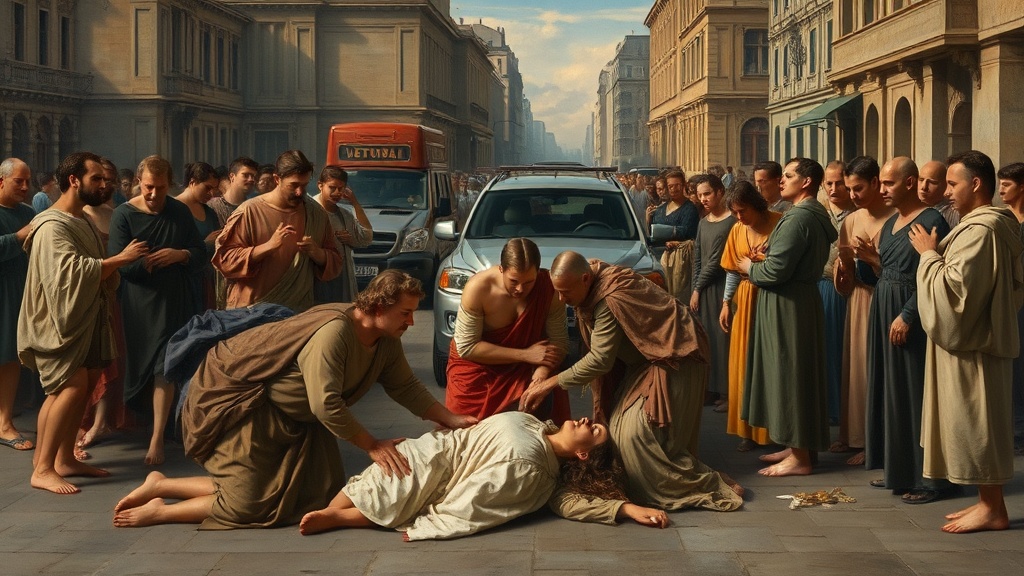
The Good Samaritan story reframes how we respond to sudden need: not with calculation about who is to blame, but with immediate compassion and concrete care. Jesus also summarises the law in love: to love your neighbor as yourself. Faith shows itself in action when strangers are tended and systems are improved to prevent harm. In practice this means first response—calling for help, offering comfort, applying basic first aid—and second response—advocacy for safer policy and support for those affected.
- Immediate care: Attend to wounds, call emergency services, offer calm presence.
- Ongoing care: Comfort, practical assistance, follow-up with those hospitalized.
- Structural care: Encourage safety measures and compassionate community planning.
Practical Steps for Our Congregation
How shall we act as a congregation? We can move from sympathy to structured help. Start with training—CPR and basic trauma care—and create a simple protocol for accidents: a notification tree, designated responders, and a small fund for immediate needs. Being prepared is an expression of neighborly love that honors both prudence and mercy. Offer pastoral visits to those affected, accompany families through appointments, and coordinate practical support like meals and transport for recovery. At the civic level, partner with local authorities on safety initiatives and support policies that reduce driver fatigue and improve intersection safety.
- Church-level: Emergency training, contact lists, pastoral visitation teams.
- Personal-level: Commit to safer driving habits and readiness to help.
- Public-level: Encourage policies that address systemic risks in urban transit.
