1. Using the SBS drama “From Today I’m Human” as a gently held mirror, we consider what it means to become truly human in the sight of God.
2. The story’s playful reversal—one who avoids becoming human learning feeling and responsibility—helps illuminate Biblical themes of transformation and relationship.
3. We will reflect on how God calls us from self-protection into costly love, community, and service.
4. Practical steps include cultivating vulnerability, neighborly compassion, and steady spiritual formation.
5. The sermon invites us to be agents of mercy as we grow together in discipleship.
1. A Story as Parable: Strange Characters, Familiar Longing
We begin with an image many of us know now: a tale where a supernatural being resists the risk of being human, preferring the safety of distance and immortality. This comedic–fantastic premise becomes for us a parable. The drama’s protagonist discovers that to be human is not merely to occupy a body, but to learn feeling, responsibility, and connection. In Scripture we meet similar reversals: those who seek to preserve themselves find emptiness, and those who lose life gain it (see Luke 9:24). In our congregational life we recognize the same pattern—people who have perfected self-protection often miss the messy beauty of belonging.
- Protective isolation breeds fear rather than freedom.
- Becoming human inevitably means encountering others who shape us.
- Transformation begins when curiosity meets courage.
2. The Cost and Gift of Change
Transformation in Scripture is never merely cosmetic; it is a reorientation of the heart. The drama’s arc—an otherworldly figure learning to feel longing, fear, and affection—mirrors the Christian journey of conversion and sanctification. Becoming human in the biblical sense is the costly admission that we need one another and depend on grace. Grace invites us out of self-sufficiency toward a life of mercy and accountability. It is a slow work: habits, small acts of kindness, honest confession, and repetition of prayer and Scripture shape us. As we practice these things, the world’s hardness gives way to warmth. The Gospel calls us to accept both the vulnerability of love and the discipline of obedience.
- Change asks for patience: growth is incremental.
- Change requires community: we are formed together.
- Change is empowered by prayer and Scripture.
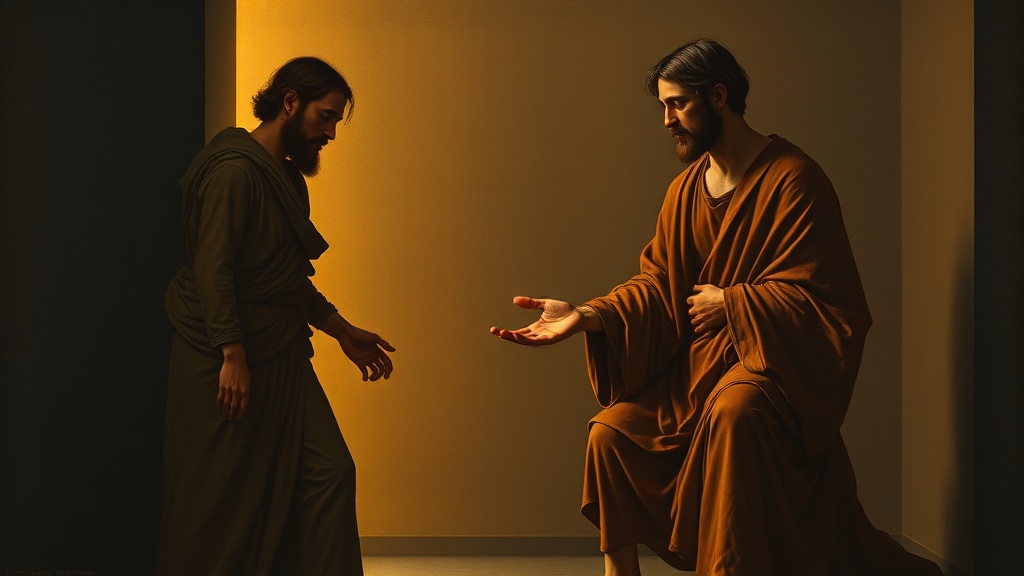
3. From ‘I’ to ‘We’: Relationship as Formation
The heart of the story is not only change but encounter. A stubborn refusal to connect is replaced, through mistaken circumstances and awkward learning, by real love. The church has always known that human formation takes place in relationship: neighborliness is the laboratory of the soul. To practice neighbor means to notice the stranger, bear one another’s burdens, and celebrate small growth. Our Christian maturity shows in the quality of our relationships—how we forgive, how we listen, and how we serve. This is neither sentimental nor simple; it is costly and yet the most truthful path to flourishing.
- Listening more than speaking builds trust.
- Service turns abstract belief into embodied love.
- Hospitality transforms strangers into family.
4. Vulnerability, Mercy, and the Work of Discipleship
Our playfully told tale helps us see that true freedom is not the absence of constraint but the presence of love. Vulnerability is not weakness but the platform for mercy—both receiving and giving it. The Gospel reframes failure not as final but as an invitation to repentance and renewed welcome. In practical church life, this means creating places where people can show their wounds and be met with compassion. The long obedience in the same direction—weekly worship, small groups, confession, service—forms disciples who can withstand temptation and offer healing to others. Let us encourage practices that cultivate humility and resilience.
- Confession opens the door to healing.
- Mercy interrupts cycles of shame and isolation.
- Discipleship is patient and steady, not theatrical.

5. A Hopeful Sending: Live the Story
Stories shape us. When we watch a character who resists humanity and then learns tenderness, we find an invitation: to try the same courage in our own lives. The church is not a museum of perfect people but a workshop for redeemed sinners. We are enlisted to offer others the chance to be formed: patient guidance, honest friendship, and steady discipline help people practice what many characters on screen must learn suddenly. May we be a community that welcomes the awkward, the hesitant, and the fearful—and helps them take the next small step. When we do, we participate in God’s slow, beautiful work of making us fully human.
- Be present more than correct.
- Remember that growth is communal.
- Trust the Spirit to weave mercy into daily life.
