1. Seasons of vocational change are natural: some leaders step back from large stages while still bearing witness in quieter ways.
2. Scripture gives clear models of passing leadership from one generation to the next (Moses→Joshua; Elijah→Elisha; Paul→Timothy).
3. Healthy succession requires humility from elders and responsibility from younger leaders—both are acts of service to God's mission.
4. The church flourishes when spiritual heritage is intentionally transferred through mentoring, shared ministry, and mutual respect.
5. Practical steps—mentoring structures, intergenerational dialogue, and shared projects—help prevent spiritual discontinuity.
The Inevitable Handing Over
There comes a time in every life and every ministry when the public stage grows smaller and the room for behind-the-scenes faithfulness grows larger. In our culture we watch beloved public figures—singers, artists, teachers—slowly step away from large venues. Translated into the life of the church, this is not a failure but a sacred rhythm: elders make room; younger ones accept callings. This movement from prominence to stewardship is a holy choreography that honors both past labors and future hope.
- Recognize seasons: prominence, consolidation, quiet stewardship.
- Acknowledge feelings: grief for endings, gratitude for service, expectation for what comes next.
- Name the good: legacy is not relinquished but entrusted.
Biblical Patterns of Succession
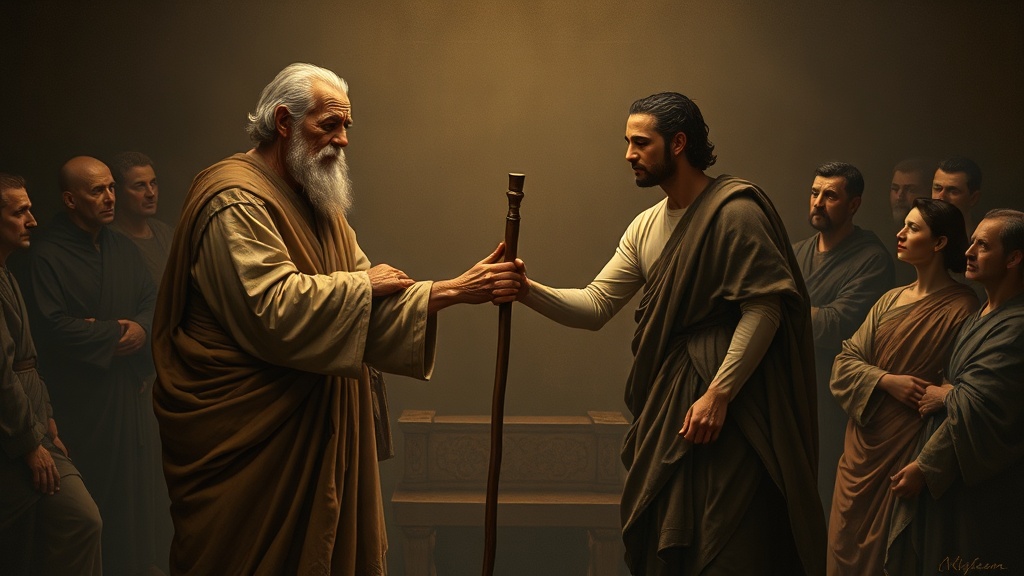
The Bible is rich with stories of one generation intentionally investing in the next. Consider Moses and Joshua: Moses had led Israel through wilderness trials, but God called Moses to encourage Joshua and then step back so Joshua could lead the people into a new chapter (Deuteronomy 31; Joshua 1). Elijah and Elisha give us a poignant picture of prophetic succession: Elijah’s mentoring culminates in Elisha receiving his mantle and a double portion of his spirit (2 Kings 2). In the New Testament, Jesus commissions the disciples and later the apostle Paul entrusts his ministry to Timothy with clear instruction about faithful teaching (Matthew 28:19–20; 2 Timothy 2:2).
- Moses → Joshua: deliberate commissioning and public blessing.
- Elijah → Elisha: personal intimacy, symbolic transfer, and empowerment.
- Paul → Timothy: doctrinal instruction, pastoral formation, and trust.
Responsibilities of the Seasoned Servant
For those who have labored long: the call is not simply to retire with silence but to steward influence wisely. Elders are invited to move from centre stage into mentorship, making space without vanishing. This requires humility, clarity, and discipline—humility to yield, clarity about what matters most, and discipline to invest time in people rather than platforms. When older leaders practice intentional delegation, they model trust in God’s providence and in the capacities of younger believers.
- Share stories and theological convictions with specificity.
- Create structures for training rather than assuming transmission will happen on its own.
- Choose where to remain present and where to release control.
Responsibilities of the Emerging Leader
Younger or newer leaders must receive legacy with reverence and readiness. Inheritance of spiritual tasks is not ownership but stewardship. Emerging leaders should listen more than they speak at first, learn practices of prayer and pastoral care from seasoned saints, and then adapt faithful patterns to new contexts. Courage is needed to take risks, but it must be informed by humility and gratitude. The healthiest successors are those who stand on the shoulders of the past while keeping their eyes on God’s future.
- Prioritize learning: doctrinal clarity, pastoral skills, and covenantal faithfulness.
- Ask for critique and receive correction as a gift.
- Develop new methods that honor the gospel and serve people effectively.

Practical Steps for the Congregation
Churches thrive when succession is planned and practiced. Here are practical, Bible-shaped steps your congregation can adopt: establish a mentoring program, create joint-service projects that pair generations, schedule regular intergenerational worship and learning, and celebrate retiring servants with thanksgiving while commissioning successors. These practices help prevent spiritual discontinuity and build a culture of mutual honor.
- Mentoring systems: intentional pairings with goals and accountability.
- Intergenerational projects: shared ministries that require cooperation.
- Celebrate and commission: public rites that bless both outgoing and incoming leaders.
As we watch public figures change course—some leaving large stages, others stepping back to quieter witness—let us learn a holy lesson. The work of God’s kingdom is never the possession of a single season or a single person. Each generation receives a torch and is responsible to pass it on with care so that the light grows brighter across time.
