1. A public example: actors Jin Tae-hyun and Park Si-eun lovingly cared for their adopted daughter during her Jeju training trip, showing practical parenthood beyond blood ties.
2. Adoption is chosen love: their words—"not blood, but family"—illustrate how devotion forms a true household.
3. Daily sacrifice matters: feeding, encouragement, and steady presence helped an athlete prepare for a race and for life.
4. The Christian story echoes adoption language: God adopts us as children with care and commitment (Eph 1:5; Gal 4:5).
5. Practical church response: honor adoptive families, offer emotional support, and practice inclusion as a congregation.
1. A Small Story, a Large Lesson
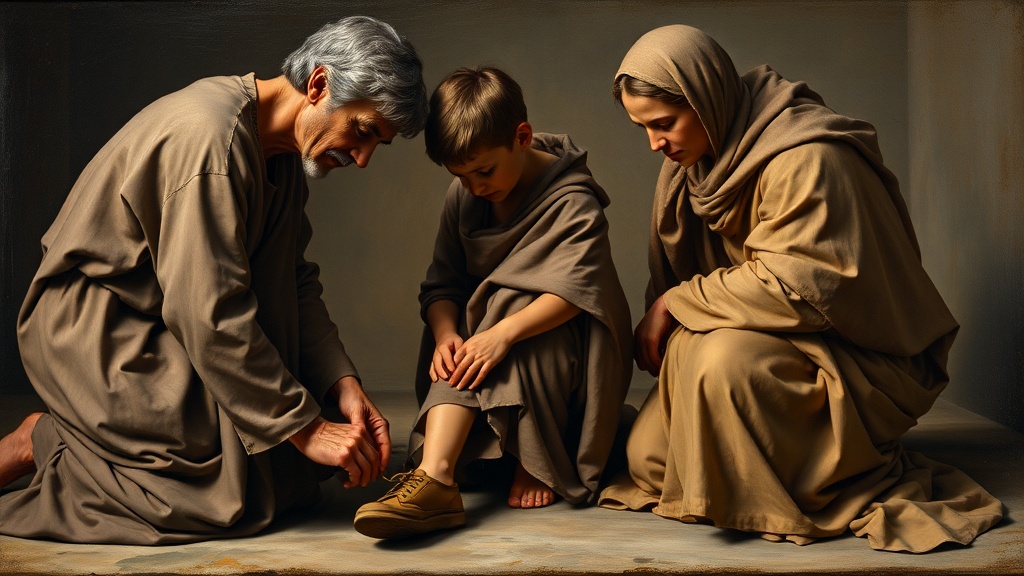
On a winter morning in Jeju, a couple known to many quietly performed the ordinary tasks of parenting: packing food, checking shoes, offering a hand when legs trembled from hard training. In news posts they wrote of gratitude to be near their adopted daughter, a marathon trainee representing a provincial athletic team. This scene is not simply celebrity trivia; it is a testimony that love is shown in small, faithful acts. The visible ministry of caregiving is the language many children learn best.
- Presence: being there for meals and rest.
- Encouragement: celebrating seconds shaved off a time.
- Sacrifice: rearranging schedules, even facing personal sorrow.
2. Beyond Biology: What Makes a Family?
People often ask what truly holds a family together. Is it genetics, tradition, or something more intentional—choice, covenant, and care? The couple’s words—"we are family though no blood ties exist"—remind us that family is grounded in commitment. In Scripture, too, God's people are described as chosen, called into a new kinship. Adoption in human life mirrors a deeper spiritual reality: a decision to welcome, nurture, and protect. Family is knitted by loyalty and love, not only by lineage.
- Chosen identity shapes belonging.
- Rituals and routines create trust.
- Public affirmation heals private doubt.
3. The Quiet Labor of Devotion
Feeding an athlete between sessions, washing damp training clothes, or sending a text that reads "proud of you"—these are acts of devotion that rarely make headlines but carry enormous weight. The couple’s readiness to care for their adopted daughter during rigorous training illustrates that dedication is often repetitive and humble. Their public gratitude—"thankful to watch and to feed"—models how acknowledgement deepens bonds. Steadfast care over time transforms lives more than dramatic gestures.
- Routine: regular care builds safety.
- Recognition: celebrating small wins encourages growth.
- Solidarity: sharing burdens lightens them.
4. Adoption as a Mirror of God's Heart
“(Galatians 4:5, NIV) to redeem those under the law, that we might receive adoption to sonship.”
When the church reflects on adoption stories, we are invited to see God's radical grace: chosen, welcomed, and given rights as children. The human parents we observed acted as agents of this grace—protecting, advocating, and delighting in their child. The theological claim is not abstract: it has practical consequences for how we treat one another, how we receive newcomers, and how we nurture identity amid possible doubts. God names us family before we perfect ourselves; we are called to do likewise.
- Grace precedes merit.
- Belonging is a gift to be extended.
- The church must model welcome.
5. How We Live This Love in Community
Stories like this challenge our congregation: how do we make our building and our hearts a home for adopted families and for anyone who needs belonging? Practical responses include offering counseling support, forming meal teams, and learning language that honors identity. The couple’s openness about joy and sorrow—celebrating athletic progress while grieving other losses—teaches humility and resilience. A church that shares practical burdens embodies the gospel more convincingly than one that only speaks in words.
- Support groups for adoptive parents.
- Mentoring programs for youth in transition.
- Volunteer teams for practical help during training or medical needs.