1. The Hapcheon Impact Basin is a bowl-shaped crater about 7 km across, formed roughly 50,000 years ago by a ~200 m meteorite impact.
2. Scientific drilling in 2020 verified shock-deformed rocks and gravity anomalies that confirm it as Korea's only officially recognized impact crater.
3. The event reminds us of cosmic power and human fragility, yet the basin today is a lived, cultivated community—an image of restoration.
4. This sermon reflects on how science and faith meet: creation's testimony, human resilience, and our call to stewardship.
5. We are invited to trust, remember, and care for places shaped by both catastrophe and grace.
1. The Place: Hapcheon Impact Basin as Testament
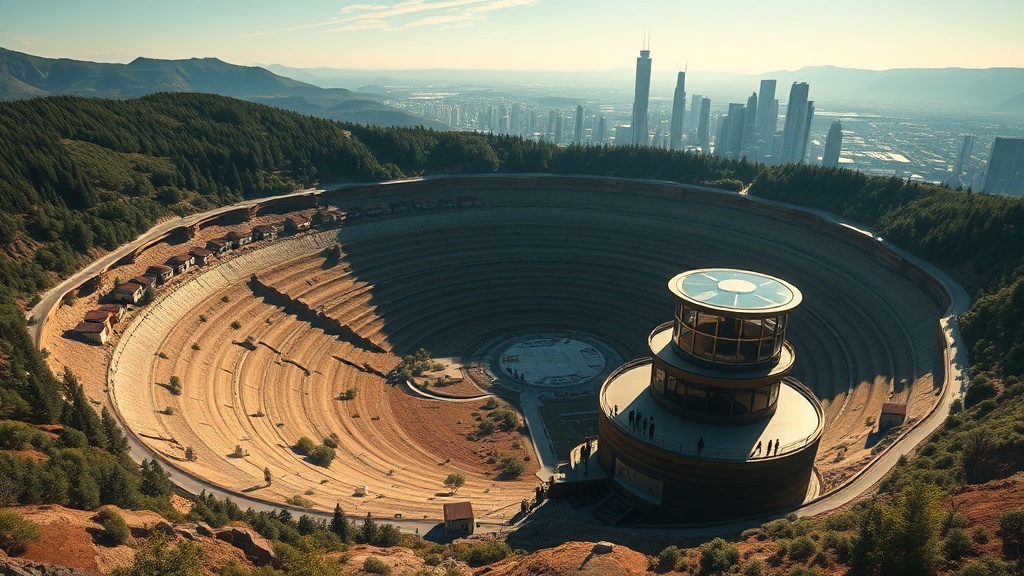
We begin with place. The Hapcheon Impact Basin (also called the Hapcheon crater at Chogye and Jeokjung) is a real, measured landscape: a bowl about seven kilometers wide, once formed by the strike of a roughly 200-meter meteor some fifty thousand years ago. Scientific teams drilled to 142 meters and found rock deformation and low-gravity signatures consistent with an impact. For us, this plain fact becomes a testimony: the earth remembers. As Psalm 19 says, creation proclaims God’s handiwork, and yet the story also tells of violence and vulnerability in the world. The basin is not merely an object for study; it is a place where people live, till fields, and raise families. From the ruins of violent history new life has emerged—villages, markets, terraces of grain. In this we see a double witness: the scale of cosmic events and the small, steady work of ordinary lives.
- Scientific facts: diameter, estimated impactor size, energy comparison to modern weapons.
- Human facts: contemporary population, markets, and continuity of settlement.
- Spiritual facts: creation's voice and the human response of witness.
2. The Witness of Science and the Voice of Scripture
The drilling and peer-reviewed work that identified Hapcheon as an impact site offer a model of humble inquiry. Science asks what happened and how the rocks were changed; Scripture asks what such events teach us about God, providence, and the human condition. The two need not fight. The basin shows that God's creation carries memory—stone records pressure, heat, and shock. We can read those records as revealing both the grandeur of the cosmos and the fragility of our place within it. This is an invitation: to let knowledge widen our awe, and let worship steady our wonder. The psalmist wrote, 'The heavens declare the glory of God' (Psalm 19:1), and when we stand at the rim of such a bowl we sense again that the Creator's ways are both immense and attentive.
- Science contributes evidence and method: drilling cores, analyzing deformation.
- Faith contributes meaning and care: purpose, hope, and moral response.
- Together they form a fuller speech about God and the world.
3. Human Fragility and the Hope of Renewal
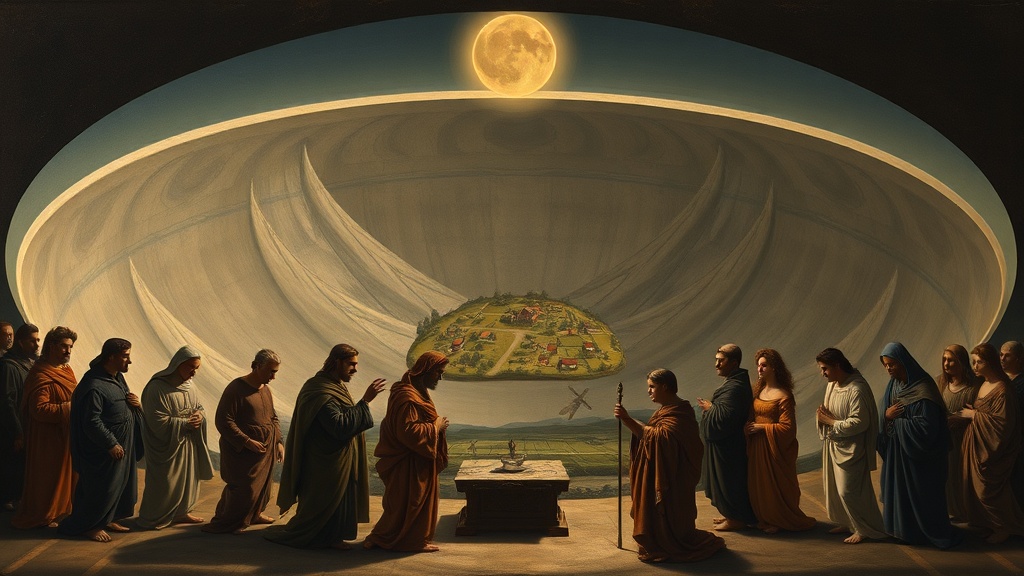
The energy released by that ancient impact is estimated in the scientific literature as unimaginably great—so large that comparisons are made to modern explosions. Yet people continued; life found a way in niches and on terraces. The basin became a home. This paradox—how catastrophic events can be followed by slow restoration—speaks to our most urgent pastoral concerns. We are fragile, subject to forces beyond our control, and still called to hope and rebuild. The Bible does not promise the absence of disaster; it promises presence, purpose, and a God who walks with people through the aftermath. The story of Hapcheon can remind us that recovery is possible, that communities can cultivate the land and one another after devastation, and that memory can become stewardship rather than fear.
- Fragility: we are finite creatures in a dynamic universe.
- Resilience: communities adapt and cultivate life in the crater today.
- Hope: faith reframes loss into purpose and neighborly care.
4. Life in the Basin: Stories of Care and Calling
Today the basin holds farms, markets that gather monthly, and families who tell stories passed down through generations—some remembering that 'a star fell here.' Those human stories are gospel-adjacent: they tell of care, perseverance, and the conviction that place matters. As Christians we can honor such places by responsible stewardship—supporting local economy, encouraging respectful geotourism, and advocating for conservation that protects both geological heritage and human livelihoods. The church can be a partner in transforming curiosity into blessing: guide visitors in humility, educate children about creation, and work with local leaders so development is sustainable. In doing so we embody the love that heals memory into hope.
- Community life: markets, farming, and kinship networks flourish in the basin.
- Cultural memory: oral traditions recall the 'fallen star' and keep history alive.
- Practical steps: conservation, education, and gentle tourism.
5. Response: Remembrance, Stewardship, and Witness
How shall we respond? First, with remembrance: the earth keeps stories; we must listen. Second, with stewardship: the basin is both scientific treasure and living home; care for it through sustainable practices. Third, with witness: let our engagement be marked by humility, generosity, and hospitality to seekers of knowledge. The apostle Joshua's charge to be strong and courageous (Joshua 1:9) invites us not to triumphalism but to steady action. Let us learn from the rocks and from our neighbors—our faith is deepened when it meets the truth. As a congregation we can pray for researchers, for local residents, and for wise plans that honor both creation and community.
- Remembrance: listen to place and its stories.
- Stewardship: practice sustainable care for land and people.
- Witness: model humility and hospitality in public conversation.
Be strong and of good courage; do not be afraid... for the LORD your God is with you wherever you go. (Joshua 1:9, ESV)”
