1. In August 1950 the defense at Dabudong on the Nakdong River held a crucial line that protected Busan and Daegu.
2. A numerically smaller Republic of Korea 1st Division with U.S. elements repelled repeated attacks through tactical restraint and integrated support.
3. The stand became a turning point that helped create the conditions for later counteroffensives and preserved a nation's hope.
4. The cost was high: daily sacrifice, collective resolve, and the involvement of police, students, and laborers alongside soldiers.
5. Spiritually, Dabudong invites reflection on trust in God in desperate hours, the meaning of sacrifice, and the duty to remember.
Beloved, today we recall the Battle of Dabudong (August 1950) not as a study in politics but as a story about people who stood between collapse and deliverance. In that narrow valley, lives were risked, choices were made, and a community's fate turned. As a sermon for the Lord's Day, let us listen for the deeper spiritual truths that echo from that pass: trust in dark hours, sacrificial service, wise leadership, and a people's duty to remember.
A Narrow Line, A Wide Consequence
The Nakdong River line was more than earth and rocks; it was the last breathing space for a nation. In early August 1950 the Republic of Korea's 1st Division, reinforced by two U.S. regiments, established defenses around Dabudong to protect the approaches to Daegu and Busan. Those who held it were outnumbered, yet they bought time that proved decisive for the wider war effort. Their endurance reminds us that sometimes a small stand shapes history. Practically, the defenders used terrain, concealed obstacles, and carefully timed countermoves to blunt repeated assaults, keeping supply routes open and morale afloat.
- Strategic location: controlled approaches to major cities.
- Integrated defense: infantry, engineers, artillery, and air support.
- Human cost: sustained daily casualties and exhaustion.
Leadership in Crisis
Major General Baek Sun-yeop (Baek Seon-yeop) exemplified calm, adaptive leadership. Facing orders and the desperate expectation that the south must not fall, he placed units on key heights, used reserves at critical moments, and coordinated mines, anti-tank weapons, and artillery with available air support. Such leadership is less about heroics and more about wise allocation of scarce resources, clear communication, and presence among the troops. In our own lives, leaders—pastors, family heads, civic servants—are called to steward resources and to act with prudent courage when stakes are high.
- Decisive reinforcement: timely movement of reserve companies.
- Combined arms approach: using every available asset effectively.
- Moral authority: steady presence that steadies others.

Sacrifice, Solidarity, and the People
The defense of Dabudong was not only soldiers; police, student volunteers, youth, and laborers stood and fought. Reports tell of staggering daily losses and exhaustion: each day, men and women laid down their lives for neighbors and city-dwellers they had never met. Such sacrifice calls us to reflect on the cost of human freedom and the faith that sustains it. Sacrifice is the language by which communities confess that some things—life, hope, dignity—are worth defending at all costs. In the church we remember that Christ's sacrifice reframes how we view all human sacrifice: with reverence, grief, and a commitment to pursue peace.
- Shared burden: different social groups contributing together.
- Endurance: multiple days of intense combat for single hills.
- Mourning and memory: the duty to honor those who fell.
Tactics, Resilience, and the Turn
On the tactical level, Dabudong shows how careful preparation, local intelligence, and improvisation can offset numbers. Anti-tank guns disabled armored thrusts; mines and prepared fields slowed advances; counterattacks and ambushes blunted momentum. Such resilience—steadfastness in action—created the conditions that allowed larger allied forces to regroup and, later, to reverse the course of the war. Spiritually, resilience is a disposition formed by prayer, sober planning, and mutual aid. The defenders did not win by chance; they sustained a disciplined, communal response under strain.
- Engineering measures: mines and obstacles to slow advances.
- Concentration of fire: focused use of limited artillery and anti-tank arms.
- Adaptive tactics: withdrawing to ambush then counterattacking.
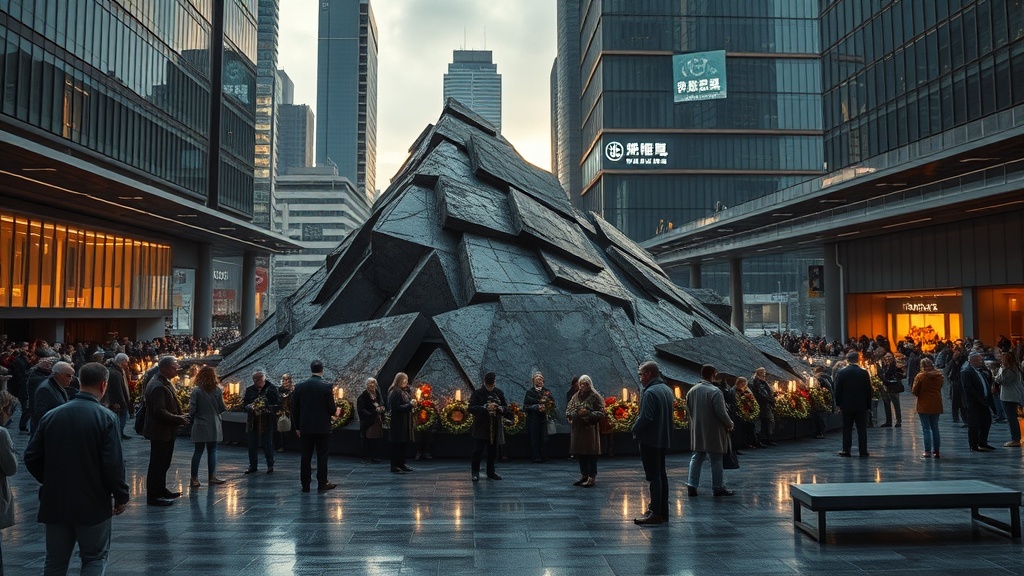
Remembering Well: Memory as Ministry
After the guns fell silent, townspeople and veterans sought to mark what had happened at Dabudong—a memorial, a stone, a simple list of names. Memory is an act of faith: it refuses to let sacrifice be erased. We Christians are called both to mourn and to learn. The analogy of Dabudong as the 'Verdun of the East' invites us not to glorify war but to honor the cost of peace and to commit to preventing future bloodshed. Remembrance disciplines the soul to gratitude, vigilance, and compassion.
- Monuments and liturgies: spaces that shape collective memory.
- Education: teaching younger generations the price of peace.
- Pastoral care: tending survivors and families with tenderness.
