1. The film 'Salmokji' reimagines a real reservoir legend as a modern spiritual parable about the pull of deep water and the consequences of ignoring warnings.
2. The name Salmokji refers geographically to a channel of moving water and is recast in the film as a place of dead trees and spiritual danger.
3. The story invites reflection on temptation, communal responsibility, and how modern navigation can fail us when spiritual guidance is needed.
4. Scripture comforts us with God’s presence in deep waters and calls the church to rescue, restraint, and compassionate warning.
5. Practical steps: listen to elders, honor boundaries, cultivate community vigilance, and trust God’s guiding Word.
1. A story from the shore: Salmokji and our modern fears
Salmokji is a real reservoir in Yesan, Chungcheongnam-do, whose name joins the characters for moving water and a passageway. The film 'Salmokji' (살목지) takes that local geography and the old water-spirit tales known among fishers and campers, and reimagines them with modern devices: road‑view screenshots, a broken GPS, and a film crew who will not heed a wary elder. For a congregation this story becomes a parable: we fear the dark of deep water, and we also fear what we cannot control. The film's horror works not only through a monster under the surface but through human choices—desecrating cairns, ignoring warnings, and treating the uncanny as content for spectacle. In our lives, sin and folly often begin in small acts of disregarding boundaries and hearing only the logic of convenience.
- Fact: Salmokji carries both a geographic meaning and folkloric weight.
- Observation: Modern tools (roadview, GPS) can create a false confidence.
- Warning: Spiritual dangers are amplified when respectful customs are dismissed.
2. The pull of deep waters: biblical images and human temptation
The Bible uses water as a powerful image: chaos, trial, baptism, and God’s sustaining care. The film's black water functions like the biblical sea—deep, mysterious, and dangerous when it draws in the unwary. Like Peter stepping out to meet Jesus on the water, a step of faith can become a step into panic when eyes are taken off the Lord. Or like Jonah, who fled into the deep, people sometimes go into places of danger because of fear, pride, or disobedience. Spiritual peril often begins with curiosity and is sealed by stubbornness. We are not left alone in the deep; God's presence is our true compass when other navigation fails.
- Sea as trial: waves test our faith.
- Baptismal image: water both cleanses and reveals who we are.
- Temptation pattern: curiosity → boundary crossing → entanglement.
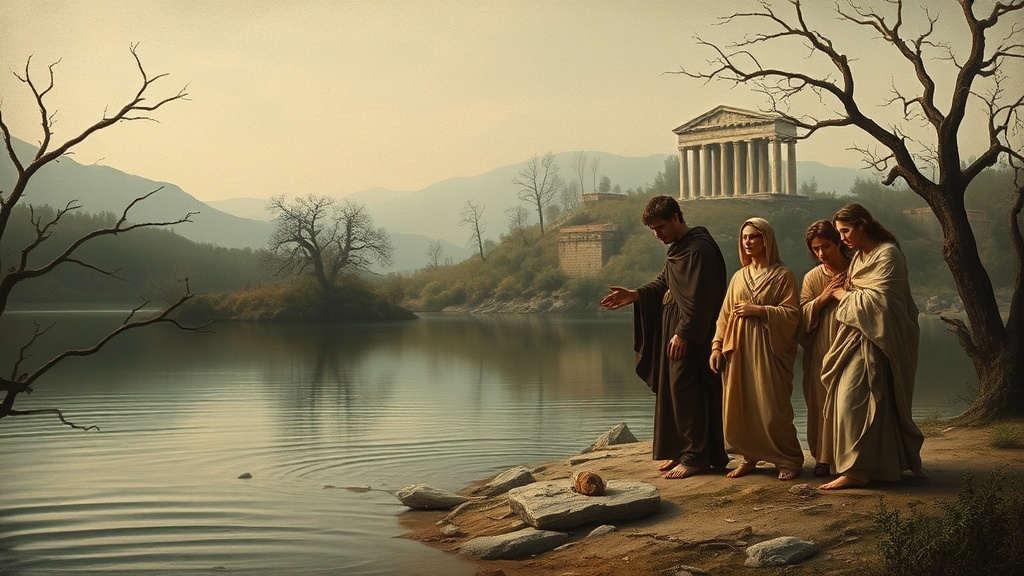
3. Warnings ignored: the cost of disrespect
In the film, a weathered elder asks that a cairn be left or restored, and the crew breaks the stone pile instead. That moment makes visible a truth: when communities set up markers—whether religious, cultural, or prudential—these are often protective, born from memory and experience. The crew's dismissal of the elder's plea accelerates the unraveling. Scripture likewise bears witness to the wisdom of listening to experience and honoring the voice of those who have seen dangers before. To treat warnings as obstacles to ambition is to invite the very consequence we hoped to avoid.
- Respect elders: their warnings are often safeguards.
- Honor boundaries: they protect people and places.
- Restore, don’t destroy: humility protects community health.
4. Community, rescue, and spiritual navigation
The crew's fragmentation in the film—some drawn into the water, others paralyzed—reminds us how vital communal care is in moments of spiritual crisis. The church is called to be both a rescue team and a restraining presence: to pull the struggling back to shore and to hold others from stepping into danger. Modern navigation fails the film characters; the GPS loops and the roadview proves insufficient. Spiritually, guidance comes from Scripture, prayer, and one another. We do not rely on devices alone. The Spirit, the Word, and the gathered saints form our true navigation system.
- Rescue: active compassion to bring people back to safety.
- Restraint: loving limits to prevent harm.
- Navigation: Scripture, prayer, and wise counsel as spiritual GPS.

5. From fear to faith: practical steps toward deliverance
How do we move from fearful curiosity to faithful courage? The film ends by leaving us unsettled; real life gives the gospel. The good news teaches that Jesus meets us in the depths and sends us back to the shore with purpose. Practical steps include confession of foolishness, seeking counsel, repairing what we broke, and renewing trust in God rather than in devices or bravado. The church can model a posture of humility that honors place, remembers history, and refuses to turn sacred stories into entertainment. These small acts—listening, repairing, warning, and rescuing—are the work of a people learning to walk by faith instead of by the glare of a screen.
- Confess and repent where pride led you into danger.
- Repair relationships and places harmed by neglect or contempt.
- Form accountability: travel with companions who will call you back.
