1. AngelGrip is a small silicone aid that supports fingers and wrist during long writing, helping distribute pressure and reduce fatigue.
2. As a metaphor, a simple tool teaches us about shared burdens, correct posture before God, and wise adaptation in ministry.
3. Scripture invites the community to carry one another’s burdens (Galatians 6:2) and to come prepared for service (2 Timothy 4:13).
4. Practical wisdom: admit limits, seek suitable tools or alternatives, and learn patience in the process of adaptation.
5. Application: care for your body as a gift, ask your brothers and sisters for support, and use small aids humbly as expressions of stewardship.
A Gentle Tool, A Deeper Lesson
We live in an age of small inventions that make life kinder to our bodies. AngelGrip — the little silicone sleeve many of you may have seen fitted over a pencil or stylus — is meant to cradle fingers, spread pressure and let a hand write longer without pain. In itself it is unremarkable: soft, inexpensive, sometimes imperfect in fit. Yet it points us to an important spiritual truth. When our hands tire from faithful labor, God often provides small, practical means to preserve the work he calls us to do. A humble aid can remind us that God cares for the small details of our bodies and our calling. In this way a tool becomes parable: how we tend to our hands says how we tend to our lives.
- Observation: small tools address real needs.
- Challenge: no tool is perfect; adaptation is required.
- Blessing: thoughtful care enables endurance.
Distribute the Burden
AngelGrip spreads pressure across the hand instead of forcing a few fingers to carry it all. That physical truth has a spiritual twin: we are not meant to shoulder every burden alone. The apostle Paul gives us clear instruction—our faith community is a place where weight is shared, not hoarded. When one member struggles, others are to come alongside, to support and to carry where possible. This is not dependency but discipleship — a mutual bearing of burdens that reflects Christ’s heart. The little act of offering help echoes the bigger Gospel: Christ bore our sin, and we bear one another’s needs.
- Practical sharing: trade tasks, visit the lonely, bring a meal.
- Emotional sharing: listen, pray, and bear witness.
- Spiritual sharing: teach, correct gently, and encourage.
Correcting Posture, Correcting Life
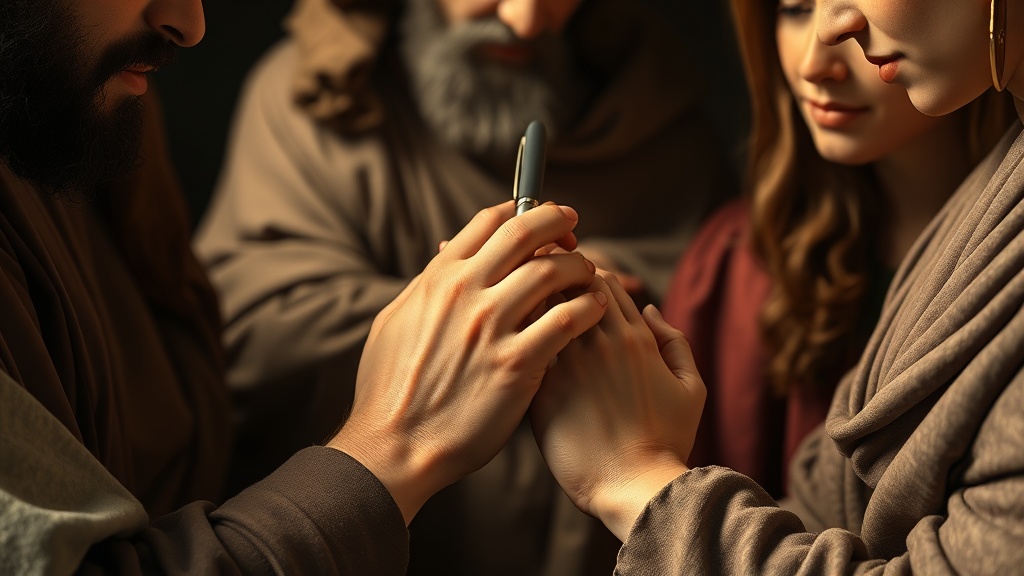
AngelGrip can help correct an unhealthy grip; it trains muscles and attention. Spiritually, the Bible often urges us to correct our posture before God — our affections, priorities and habits. A small corrective can have outsized effect: changing how we hold a pen can reduce pain, and changing how we hold a grudge can free a heart. The discipline of right posture—physical and spiritual—comes by practice, humility, and sometimes by accepting help. We must be willing to adapt our habits when they hinder our service to God and neighbor.
- Habitual change requires patience and repetition.
- Guides and teachers (and simple tools) accelerate learning.
- Progress is fragile; encourage one another along the way.
Limitations and Creative Adaptation
No device fits all hands; AngelGrip will not suit every pen or every person. This limitation invites ingenuity: change the pen, add an adapter, or use an alternative grip. So it is in the life of faith. We face contexts where a familiar method fails; God often calls us not to despair but to improvise wisely. Admitting limits is not failure — it is honest stewardship that opens space for better solutions. When we recognize a mismatch, humility and creativity lead to resilience rather than resignation.
- Admit constraints honestly — do not pretend perfection.
- Seek alternatives: tools, people, rhythms, or rest.
- Test adjustments slowly and learn from experience.

Stewardship of Body and Service
Finally, the way we care for our hands speaks about how we care for God’s work. Paul’s request in a personal letter — "When you come, bring the cloak and the books" — is a small example of attention to practical needs for ministry. We, too, must pay attention to the means of service: rest, posture, modest aids, and the help of the community. Caring for the body that serves is a form of worship and stewardship. It preserves the work God entrusts to us and honors the Creator who made our bodies good.
- Prepare: bring what you need when you serve.
- Protect: set boundaries to avoid chronic harm.
- Partner: rely on community and offer help in turn.
