A small, decayed boat washed ashore bearing a foreign newspaper prompts communal attention and questions.
We will reflect on how Christians respond when uncertain events stir fear and curiosity.
Scripture calls us to discernment, compassion, and steady faith amid unknowns.
Practical steps include prayerful listening, caring for neighbors, and wise stewardship of information.
May the church practice hope and hospitality while respecting lawful inquiries and public order.
A Strange Discovery
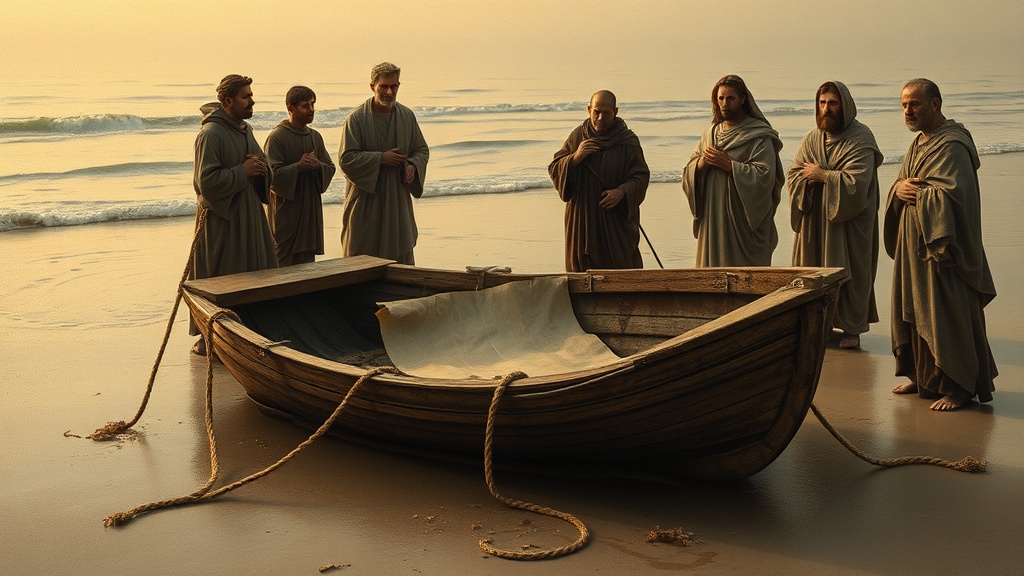
News reached the shore: a small, rotten wooden skiff had been found, its planks eaten by time and salt. Inside lay a sheet of printed paper, water-stained and telling of a world beyond that beach. Such discoveries capture our imagination and stir a mix of curiosity, worry, and compassion. As believers, we notice two immediate responses among people: some rush to speculate; others close off in fear. Both are natural. The Christian way asks us to hold a third posture — attentive sobriety: to observe without leaping into rumor, to care without surrendering to panic.
- Curiosity: we want to know who, why, how.
- Fear: unfamiliar things can unsettle our sense of safety.
- Compassion: the sight of brokenness draws a tender heart.
We are called to be steady at the edges of uncertainty — not to pretend we have all answers, but to bring patience and prayer.
Reading the Signs with Wisdom
Scripture often uses sea imagery to teach. When the waves bring things ashore, the church is invited to read the signs with wisdom. Wisdom here is twofold: practical discernment (asking proper authorities to investigate) and spiritual discernment (seeking God’s heart in our response). We do not substitute speculation for investigation; nor do we let suspicion become our default posture toward neighbors. Wise people seek both truth and mercy.
- Practical: respect lawful inquiry and cooperate with authorities.
- Spiritual: let prayer shape how we interpret events.
- Communal: hold one another accountable to truth and to kindness.
Discernment honors both facts and faith; it refuses to make the unknown an excuse for cruelty or careless talk.
Fear, Community, and the Christian Response
When unusual events repeat — as beaches receive more driftwood and strange finds — communities can grow anxious. The church’s role is not to inflame that anxiety but to tend it. This means attending to neighbors’ feelings, offering clear-headed reassurance, and creating spaces where questions can be asked honestly. It also means protecting vulnerable people from being unfairly stigmatized. Our primary tools are presence, listening, and offerings of practical help.
- Presence: show up for those who are afraid.
- Listening: let people voice concerns without instant rebuttal.
- Practical help: offer meals, counsel, and prayer gatherings.
The gospel calms fear not by denying danger, but by giving us a presence and purpose in the face of it.
Lessons from the Shore
These verses remind us that the sea’s surprises — found objects, sudden storms, the unknown — can be occasions for worship, not only for worry. The Psalmist describes panic and deliverance: a pattern familiar to us. We may not know the full story behind a beached boat, yet we can respond with prayer and praise. The church is to be a people who name fear honestly and then turn to God together, trusting that He cares for both the frightened and the curious.
- Name the fear honestly in prayer.
- Trust God’s care while cooperating with responsible inquiry.
- Offer hospitality to those who feel unsettled.
Even when the shore brings mysteries, God invites us to respond with prayerful courage and neighborly care.

Living with Discernment and Hope
Finally, what long-term habits should the church cultivate? First, cultivate discernment: practice verifying reports, teach faithful media habits, and encourage prayerful reflection. Second, cultivate hospitality: be a refuge for anxious neighbors and a place where rumors are gently corrected. Third, cultivate steady hope: remind one another that our ultimate security rests in Christ, who calms hearts as surely as He calms seas. These are small disciplines that build resilience and witness in difficult seasons.
- Discernment: check sources and avoid spreading unverified claims.
- Hospitality: protect the vulnerable from scapegoating.
- Hope: ground our confidence in God's presence and promises.
When we bind discernment to compassion, the church becomes a steadying light — clear in truth and rich in love.
