Reconciliation begins where sorrow once lived.
Marriage is not only a bond, but a calling to responsibility.
Family can be rebuilt through grace, patience, and truth.
Children grow on their own paths, yet remain part of a lasting love.
God can open a new beginning even after a painful season.
When a Family Is Rebuilt by Grace
Dear brothers and sisters, today we reflect on a life story that reminds us of a deep biblical truth: a painful ending is not always the end of God’s work. The material before us speaks of a man who faced the sorrow of divorce, then entered a new marriage with a younger wife, and later spoke of his children—one having studied at Seoul National University and another becoming a musical actor. We do not treat this as gossip, nor do we judge the private details of a household. Instead, we listen for the larger human question hidden inside every family story: Can love be restored? Can a life be continued after tears? Can a home be built again with wisdom, humility, and responsibility?
The Bible never denies the wounds of life. It does not pretend that every marriage is easy or that every family remains untouched by pain. Yet Scripture also teaches that God is near to the brokenhearted, and that His mercy can meet us at the point where we feel most unfinished. A remarriage is not a simple repeat of the past; it is a new chapter that carries memory, responsibility, and the need for tenderness. For this reason, the church must speak with compassion. We are not called to applaud appearances or condemn weakness. We are called to remember that God can lead people through grief into maturity, through loss into service, and through brokenness into a still-usable life.
- God is not distant from family pain.
- Healing often begins with honest sorrow.
- New beginnings require more than hope; they require character.
Marriage Is a Covenant, Not a Passing Emotion
In our time, many people think of marriage mainly as companionship, romance, or personal fulfillment. Those things matter, but Scripture goes deeper. Marriage is a covenant before God. It is not merely shared convenience; it is a sacred promise of faithfulness, sacrifice, and mutual care. When a person remarries after divorce, that covenantal understanding becomes even more important. The new relationship must not be built on denial of the past, but on truth, repentance where needed, and a steady commitment to honor the other person. A home becomes strong when truth and kindness live together.
The scripture tells us that love is patient and kind. That is not sentimental language. It is the daily work of listening, forgiving, carrying burdens, and making room for one another’s scars. In any remarried household, there may be memories that still ache, children who must adjust, and expectations that need to be gently reordered. Yet we must not see only the difficulties. We should also see the dignity of continuing to love after disappointment. That is why the church should encourage every family, first-marriage or remarriage, to practice prayer, patience, and faithful presence. A household is not made holy by appearance; it is made steady by obedience to God’s ways.
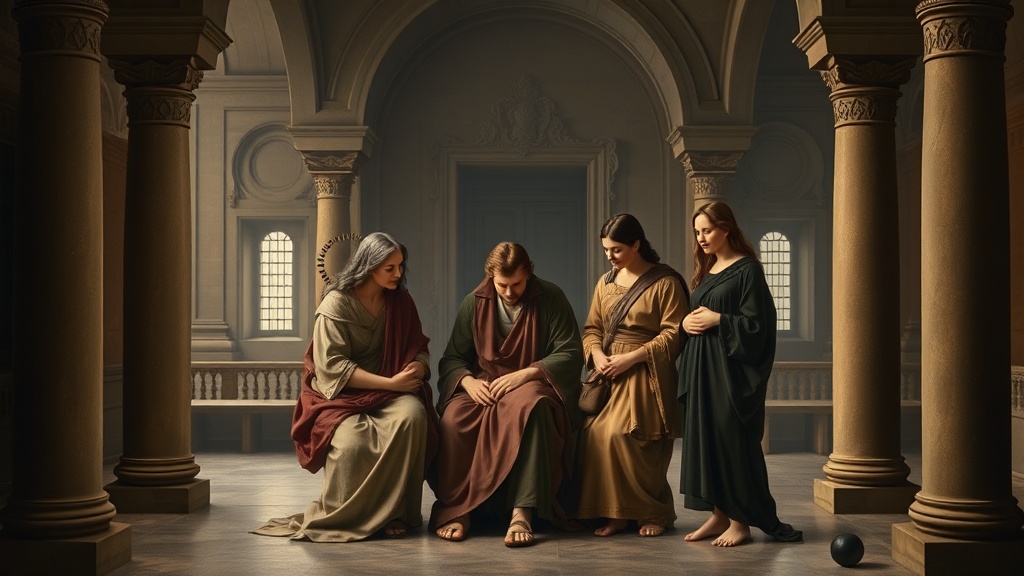
- Covenant means promise, not convenience.
- Love grows through patience and daily faithfulness.
- Truth protects a family better than image does.
Children Grow, and Love Must Let Them Grow
The material also mentions the children: one associated with a strong academic path and another with the world of musical performance. Whatever the exact details of each life journey, the point is clear: children do not remain frozen in the story of their parents. They must grow into their own callings. This too is a biblical truth. Parents are not the owners of their children’s destiny; they are stewards who nurture, guide, and then release. Love does not only hold; love also lets go at the right time.
Many parents carry quiet anxieties: “Will my child be safe? Will they choose wisely? Will our family story leave a mark of harm or hope?” These are tender questions, and God does not shame them. But He does call parents to faith. Faith means raising children with prayer, discipline, truth, and warmth, while remembering that the final shaping of a human life belongs to God. The success of children should never become a trophy for parents, nor should their struggles become a sentence of shame. Instead, we see them as souls entrusted to our care. Whether a child becomes a scholar, an artist, a worker, or a homemaker, the greater calling is to walk in integrity before the Lord.
- Parents sow; God gives growth.
- Children need guidance, but also space to answer God’s call.
- Family love remains even when paths become different.
The Church’s Compassion and Discernment
Sometimes the church is tempted to speak too quickly about family matters. We either idealize them unrealistically or reduce them to public spectacles. But the way of Christ is different. Christ sees the whole person. He sees sorrow, history, responsibility, and the possibility of renewal all at once. Therefore the church must answer family brokenness with both compassion and discernment. Compassion says, “We will not crush the bruised reed.” Discernment says, “We will still call people to truth, purity, and responsibility before God.” The goal is not to approve every choice, but to guide every heart toward holiness.
This is why the theme of remarriage and family meaning belongs in a Sunday message. It reminds us that real life is often complicated, and yet God is not confused by complexity. He knows the weight of regret, the challenge of rebuilding trust, and the longing to live peacefully after pain. No believer should despair that the past has ruined their usefulness. In Christ, there is room for repentance, for wise beginnings, and for patient healing. Even when a home has been reshaped, it can still become a place where prayer is spoken, the Word is honored, and love is practiced in ordinary ways. That is how a family becomes a witness.

- The church must avoid harsh judgment.
- The church must also avoid shallow comfort.
- True pastoral care points people back to Christ.
A New Beginning Under God’s Mercy
In the end, the story before us is not mainly about celebrity, age difference, or public headlines. It is about the human longing to begin again. That longing is not strange to Scripture. Abraham left his country. Ruth entered a new people. Peter wept bitterly and was restored. Paul was called after a life once marked by violence. In every case, God did not merely erase the past; He transformed it for His purpose. That is the hope offered to every home: God can write grace where the world expected only loss.
So if you have known divorce, you are not disqualified from God’s care. If you have entered remarriage, you are not exempt from the need for holiness. If you are raising children in a complicated family setting, you are not abandoned. The Lord gives wisdom for each step. He teaches us to love without pretending, to forgive without forgetting wisdom, and to build without pride. A family may be restructured, but in God’s hands it need not become hopeless. What matters most is not whether the road was smooth, but whether the household walks with the Lord.
