The play Fleabag exposes the loneliness of modern life.
It reveals the human tendency toward self-destructive desire and hidden shame.
Its black comedy invites laughter, then leaves a quiet ache in the heart.
In a one-woman performance, the inner world becomes visible on stage.
Scripture shows a deeper answer: honest confession, mercy, and restoration in God.
1. A Mirror for Our Age
Today’s world is full of noise, messages, and images, yet many people still live with a deep inner emptiness. The play Fleabag speaks to that condition with unusual honesty. It presents a woman who appears witty, sharp, and even humorous, but beneath the surface is wounded, divided, and alone. This is why the work captures so many hearts. It does not merely tell a story; it holds up a mirror. We may smile at the dialogue, but soon we recognize something of ourselves in it. There are moments when we, too, hide pain behind laughter, or cover loneliness with activity, or use words to avoid the real condition of the soul. The stage becomes the place where the truth of human life is gently exposed. For believers, this is not only a cultural observation but a spiritual one. Scripture has always spoken honestly about the human heart. We are not whole by nature, and we cannot heal ourselves simply by willpower. The value of a work like this is that it pushes us to ask a serious question: what do we do with the brokenness that lives inside us?
- Modern loneliness can exist even in crowded places.
- Humor can become a mask for sorrow.
- Self-awareness is important, but it is not enough to save us.
2. The Heart’s Self-Destructive Patterns
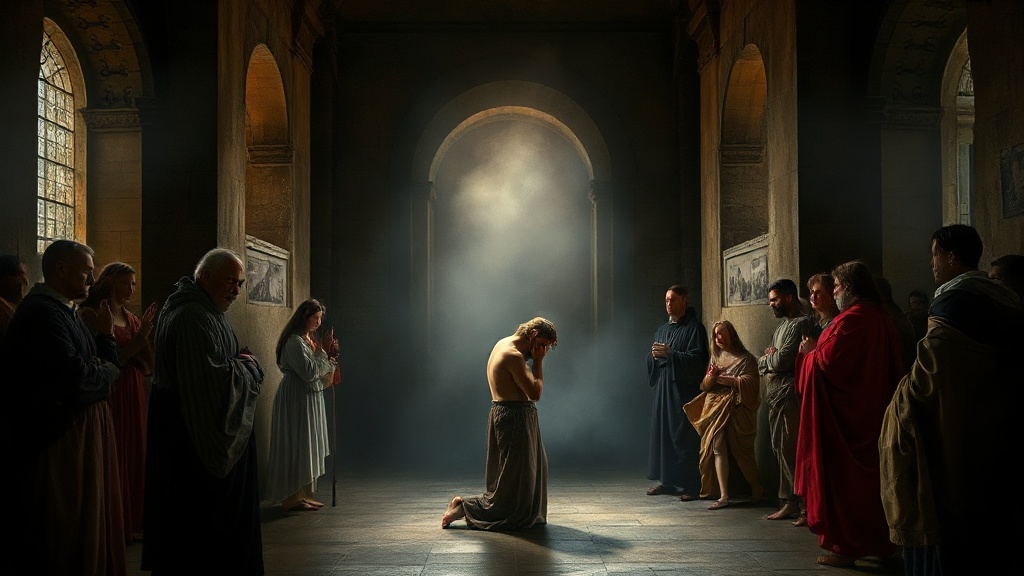
The theme of self-destructive desire is painful because it is familiar. Many people know what it means to choose what harms them, return to what weakens them, or remain attached to what finally deepens their sorrow. The play describes that human pattern not with sermon-like directness, but through black comedy, where laughter and discomfort stand side by side. That combination is powerful because it tells the truth without pretending that the truth is easy. In the Bible, this inner struggle is not unexpected. Romans 7 describes a painful conflict between what a person knows is right and what that person still does. We understand, then, that the problem is not merely bad habits; it is the divided condition of the human heart. That is why moral effort alone cannot fully solve the issue. We need more than advice. We need redemption. The gospel does not deny our brokenness; it names it, and then offers grace that reaches deeper than shame. When a person sees their own self-ruin honestly, that can become the first step toward healing. The Lord does not despise the one who finally says, “I cannot fix myself.”
- Self-destruction often hides beneath the appearance of freedom.
- Inner conflict is not a sign of weakness alone, but of a fallen human condition.
- God’s grace speaks where our self-control finally runs out.
3. The Power and Limits of Black Comedy
Black comedy is a strange and effective form. It makes people laugh while quietly leading them toward sorrow and reflection. That is one reason this play is memorable. It does not preach directly, yet it presses the audience to think. The laugh is often followed by silence, and the silence is where the message settles. There is wisdom in recognizing that art can uncover truth by making us feel the weight of a situation before we can explain it. At the same time, black comedy has limits. If laughter becomes the only response, then the seriousness of sin, pain, and longing can be softened too much. That is why a Christian reading of this work must be careful. We may appreciate the artistic honesty without losing sight of the deeper spiritual need behind it. A wounded soul does not need only clever language. It needs mercy. It needs a place where shame does not rule the whole story. This is where the gospel is different from mere observation. The gospel does not stop at diagnosis. It opens the door to a new beginning. It tells us that the Lord sees what is hidden, and yet still invites us near.
- Art can reveal truth by combining laughter with discomfort.
- Truth becomes clearer when the heart is allowed to feel before it explains.
- Mercy is stronger than shame.
4. Confession Before the God Who Sees
The deepest Christian answer to loneliness is not self-expression alone, but communion with the God who knows us fully and loves us still. The beauty of Scripture is that it never asks us to pretend. It invites us to come as we are, with our divided hearts, our buried shame, and our exhausted attempts to appear strong. Psalm 139 reminds us that we cannot hide from God, not because He is waiting to condemn us, but because He already knows us and remains present. That truth can be frightening only if we think of God as distant. In Christ, however, God comes near to the lonely, the broken, and the ashamed. He meets the woman at the well. He welcomes the prodigal son. He receives those who are weary and heavy-laden. In that light, a play like Fleabag becomes more than a story of one woman’s struggle. It becomes a reminder that modern people still hunger to be seen without being rejected. The church must therefore be a place of truth and tenderness, where people can speak honestly and discover that grace is not a reward for the polished, but a gift for the needy. The Lord heals not by pretending we are fine, but by loving us in our need.

- God already knows the whole truth about us.
- Grace becomes precious when shame no longer has the final word.
- The church is called to be a place of healing, not performance.
5. From Loneliness to Restoration
In the end, the question raised by this play is not only about one character on stage. It is about every human heart that aches for belonging, peace, and a clean start. Loneliness is real. Desire is powerful. Shame can be heavy. Yet none of these realities is greater than the mercy of God. The Christian faith does not minimize the pain of life; it places that pain in the hands of the One who can redeem it. That is why the message of the gospel is not self-improvement, but new life. We are invited to stop hiding, stop pretending, and stop living as though our wounds define us forever. The Lord who meets the broken can also restore the broken. He can teach us to confess with honesty, receive forgiveness with humility, and walk forward with hope. So when we think about Fleabag, let us not only think about a powerful performance or a striking black comedy. Let us hear the deeper cry beneath it: the human soul is searching for mercy. And the good news of Jesus Christ is that mercy is real, available, and strong enough to make a new beginning.
- Loneliness is answered by God’s nearness.
- Shame is answered by forgiveness.
- Brokenness is answered by restoration.
