The stage musical tells the story of ordinary life through the inner world.
Yumi’s love, work, and daily choices are viewed through the cells of the mind.
The production invites audiences to reflect on conscience, emotion, and direction.
What seems small in a day may reveal the deepest movements of the heart.
God cares not only about outward appearance, but also about the hidden inner life.
When the Heart Becomes a Chorus
Today’s theme is the musical Cells at Work: Yumi’s Cells, a story that turns an ordinary woman’s daily life into a living stage of thoughts, feelings, and choices. At first glance, it is an entertainment piece born from contemporary culture. Yet beneath its creative surface, it opens a familiar human question: what is happening inside us when we smile, hesitate, love, or remain silent? The Bible has always paid attention to the unseen places of the person. Scripture does not merely ask what we do; it asks what governs the heart. That is why this musical, even without being a religious work, can become a quiet mirror for believers. It reminds us that human beings are not simple. We live with competing voices, shifting motives, and fragile hopes. And in that complexity, God is present. He sees the hidden chamber of the soul more clearly than we see ourselves. A warm, pastoral sermon can begin here: not with judgment, but with honest recognition that every life contains a chorus of inner movements.
- The visible action often begins with invisible thoughts.
- Daily emotions reveal deeper spiritual condition.
- Ordinary people still live before the gaze of God.
Yumi’s Ordinary Life and God’s Care
One of the most moving features of this musical is that its central character is not a hero, a celebrity, or a person with extraordinary status. She is simply Yumi, a working woman who carries the ordinary burdens of love, work, fatigue, and hope. That choice is wise, because Scripture often reveals God’s tenderness in the ordinary. The Lord does not only meet people on mountains and in miracles; He meets them in fields, kitchens, roads, workplaces, and moments of daily decision. Yumi’s story speaks to anyone who has felt unnoticed, emotionally tangled, or inwardly tired. The heart of the matter is this: ordinary life is not spiritually small. In fact, it is often the very place where faith is tested and formed. When we live one day at a time, the way we respond to frustration, affection, disappointment, and longing becomes deeply meaningful. The musical uses cells as a metaphor, but the spiritual lesson is broader: our inner life is never idle. It is always being shaped by what we treasure, fear, and desire. God’s grace meets us not only in dramatic turning points, but also in the quiet repetition of everyday faithfulness.
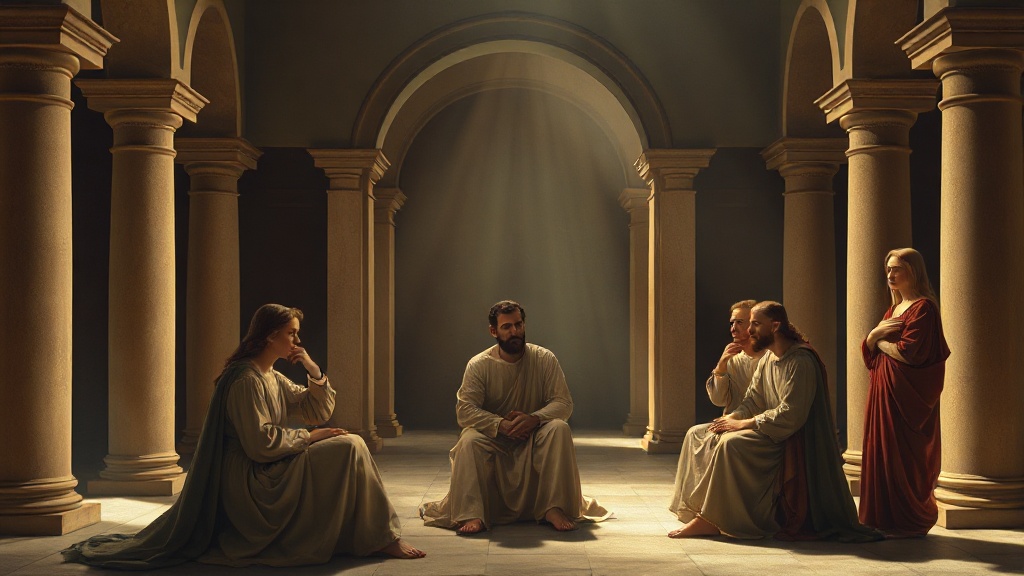
- God sees the hidden pressures behind ordinary routines.
- Faithfulness is often formed in repetitive daily choices.
- The smallest moments can reveal the greatest spiritual truth.
The Many Voices Within Us
The creative brilliance of the musical lies in its depiction of the mind as a community of cells. That image may be playful, but it points to a serious truth: our inner world is often crowded. There is the voice of caution, the voice of desire, the voice of fear, the voice of memory, the voice of compassion, and the voice of resolve. Sometimes these voices conflict. Sometimes they cooperate. Often we do not know how to untangle them. In that sense, the musical becomes a stage version of a universal struggle. Many believers know what it means to want the right thing and still feel pulled in several directions at once. We may desire patience and still become impatient. We may long for love and still protect ourselves too much. We may know what is good and still hesitate to act. This is why the Christian life is not merely self-management; it is surrender. The Holy Spirit does not just improve our emotions from the outside. He renews the heart from within, teaching us to listen more closely to truth than to impulse. When the inner voices are noisy, we need not despair. We need guidance, prayer, and the steady mercy of God.
- Inner conflict is part of the human condition.
- Not every strong feeling should lead our decision.
- Prayer helps bring the heart back into harmony with truth.
Love, Choice, and the Direction of the Soul
Because the story centers on love and personal decision, it naturally invites reflection on how the heart chooses its path. Love is never only emotion; it is also direction. The people we become are shaped by repeated choices—what we pursue, what we refuse, what we forgive, and what we keep close. In the musical, the movement of the cells represents that inward process. In biblical language, we might say that the heart leans somewhere. It leans toward trust or suspicion, generosity or self-protection, peace or pride. This is why the gospel speaks so often about repentance, renewal, and new life. God does not merely tell us to behave better. He gives us a new orientation. When Christ rules the heart, our choices begin to change from the root. We start to love what is good, not because we are forced, but because grace has softened us. That is a beautiful connection for a sermon: the deepest human question is not simply, “What will I do?” but, “Whom will I follow, and what will shape my inner direction?” In that question, every believer finds both humility and hope.

- Love is not only felt; it is chosen and nurtured.
- Renewed minds learn to discern God’s will.
- Inner direction matters more than outward appearance.
A Quiet Invitation to Examine the Heart
What makes this theme useful for preaching is not the musical itself, but the doorway it opens into spiritual reflection. A congregation of adults knows that life is full of unseen pressures: family responsibility, aging, work, regret, memory, and the tender burden of loving others well. The gospel addresses all of this with honesty and hope. God invites us to examine the heart, not to shame us, but to heal us. He reveals what is broken so that He may restore it. He uncovers confusion so that He may give wisdom. He exposes selfishness so that He may grow love. And He does all this with fatherly patience. This is where a pastoral sermon can rest: the Lord is not only interested in the actions others witness, but in the hidden life no one else can fully see. He knows the cells of the soul, the untouched corners of memory, and the silent reasons behind our words. So we come before Him with confidence and humility. The One who created the heart is able to renew it. The One who sees all things is also the One who can make all things new.
- God exposes wounds to heal them.
- He renews the heart with patience, not cruelty.
- True change begins when we come honestly before Him.
