Aging is not a burden to be hidden, but a life stage to be honored.
The rise of senior care reminds us that care is a social necessity and a moral responsibility.
When families are tired and communities are stretched, compassionate support becomes a blessing.
Scripture calls us to honor the elderly, bear one another’s burdens, and love our neighbors.
The church can lead by turning care into a living testimony of grace.
1. When a Society Grows Older, What Does Love Look Like?
Beloved brothers and sisters, today we live in a time when the face of society is changing. More parents are growing old, more households are living with loneliness, and more families are asking, “Who will care for them with patience and dignity?” The rise of the senior care industry is not merely an economic trend. It is a mirror held up to our generation, showing us what kind of people we are becoming. If we measure life only by efficiency, the elderly may seem slow. But if we measure life by faith, the elderly are not a burden; they are a treasure. Their wrinkles tell stories, their weakness calls forth mercy, and their presence invites us to remember that every human being bears the image of God. The Bible never treats old age as disposable. It treats it as worthy of honor, tenderness, and protection. In that sense, senior care is not simply about buildings, beds, or business models. At its deepest level, it is about whether a community still knows how to love when strength has faded.
- Growing older is a common human path, not a lonely exception.
- Care for the elderly reveals the moral health of a society.
- Compassion is strongest when the world values people who can no longer “produce.”
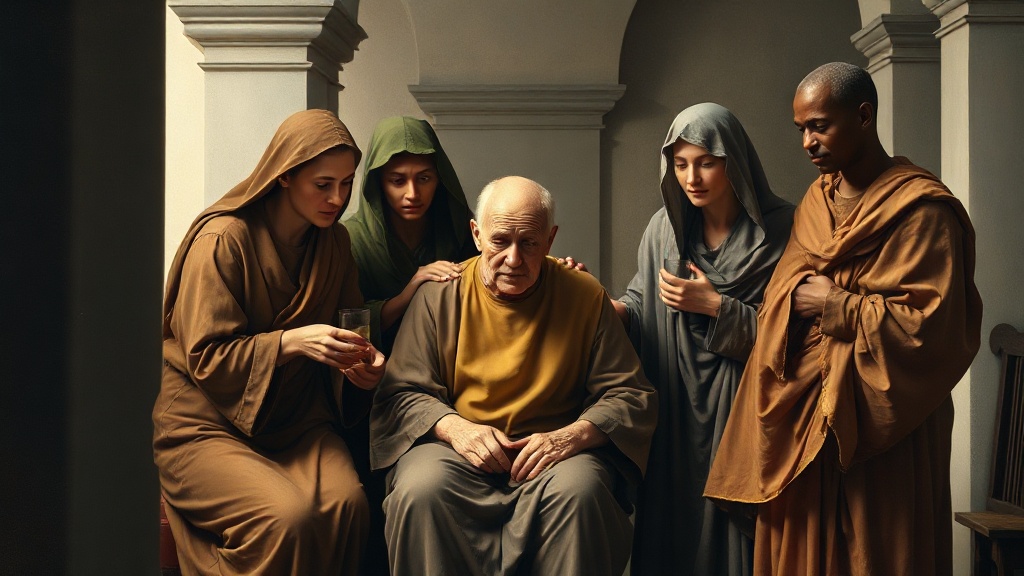
2. The Bible’s Quiet and Strong Command: Honor the Aged
There are many passages in Scripture that guide us gently but firmly. One of the clearest is this: honor the elderly. This is not only a cultural custom; it is a divine principle. In Leviticus, God says to rise in the presence of the aged and show respect for the old. In the wisdom of the Psalms, old age is not described as useless, but as fruitful in its own way. Even when the body weakens, the soul may become deeper, more prayerful, and more dependent upon God. That is a beauty the world often forgets. The senior care question therefore becomes spiritual before it becomes practical. Are we building a culture where older adults are hidden away, or one where they are seen, heard, and cherished? A church that forgets its elders forgets part of its own memory. A family that neglects its aged parents loses a sacred opportunity to practice gratitude. And a society that honors only youth will one day discover that it has abandoned its own future. The command to honor the aged is a call to remember that love does not expire with age; it matures.
- Honor is not sentimental talk; it is visible respect.
- Old age can be a season of wisdom, prayer, and spiritual depth.
- The way we treat elders reveals whether we still fear God.
3. Care Is Not Only a Service; It Is a Form of Love
The article we were given tells us that a company expanded its senior care business and saw remarkable growth. We do not focus on the company itself, but on the lesson hidden inside the story: when society recognizes a real need, care becomes a meaningful vocation. Senior care includes housing, meals, health support, rehabilitation, daily help, and companionship. Yet beneath all these services lies one deeper need: human dignity. An elderly person may need medication, but also a listening ear. They may need a safe bed, but also a gentle hand. They may need assistance walking, but also the assurance that they are not forgotten. This is where the Christian vision becomes beautiful. The gospel teaches us that love touches the body, the mind, and the soul. When we care for the elderly, we are not merely managing a condition; we are honoring a person. We are saying, in practical ways, “You still matter.” That is why senior care should never become cold, mechanical, or purely profit-driven. It must remain personal. The church, too, can learn from this. Visiting the homebound, supporting caregivers, and making room for the elderly in worship are not small tasks. They are acts of covenant love.
- Care must address both practical needs and emotional loneliness.
- Dignity is protected when people are treated as persons, not problems.
- Christian love is always embodied in concrete service.

4. The Church’s Calling in an Aging Age
In a world where families are often stretched thin, the church must not step back from its calling. Instead, it must become a community where generations meet, burdens are shared, and aging is met with prayerful compassion. The splendid thing about the body of Christ is that no part lives only for itself. When one member suffers, all suffer together. When one member grows weak, the others do not abandon them; they carry them. This is why senior care belongs near the heart of Christian discipleship. We are called to remember those who can no longer attend easily, to sit with those who are lonely, to listen to those whose stories are often interrupted, and to support families who are exhausted from caregiving. The church may not be able to solve every social problem, but it can model a different kind of life. It can show that the elderly are not invisible. It can teach children that grandparents are not obstacles, but witnesses. It can teach adults that service is not a task reserved for institutions; it is the daily shape of love. When the church practices this well, the world sees a living parable of the kingdom of God.
- Churches can build intergenerational fellowship, not age segregation.
- Visitation, prayer, meals, and companionship are holy ministries.
- Supporting caregivers is also a form of caring for the elderly.
5. A Better Way Forward: Dignity, Responsibility, and Hope
There are also concerns in every growing industry. If senior care becomes too commercial, the compassion at its center may grow thin. If access depends only on wealth, then care becomes uneven. If facilities replace family love rather than support it, loneliness may deepen in a new form. These concerns matter, because Scripture never allows us to separate justice from mercy. Therefore, the best path forward is not to reject senior care, but to shape it with wisdom. We should seek a balance of public responsibility and private compassion, professional skill and relational warmth, structured care and spiritual presence. In the same way, Christian communities should pray for and participate in systems that protect the vulnerable. The goal is not merely longer life, but a dignified life. Not merely safety, but peace. Not merely survival, but blessing. Old age should not be treated as the ending of usefulness, but as a season where grace can shine in quieter ways. The elderly remind us that human worth does not come from speed, beauty, or strength. It comes from being loved by God. And if God has not discarded them, neither may we.
- Care systems should protect dignity, not exploit vulnerability.
- True reform values both professional excellence and compassion.
- Hope is found when society sees aging as sacred, not shameful.
