1. The occult may look like mere entertainment, but Scripture invites believers to discern the world behind the image.
2. Fear is powerful, yet it must never replace trust in God’s sovereignty and goodness.
3. The Bible warns against seeking hidden powers, spirits, and forbidden knowledge apart from God.
4. Christians do not need to be fascinated by darkness to understand evil; Christ is the true light.
5. Our calling is not panic, but prayerful discernment, holiness, and confident faith.
1. Why Do People Keep Returning to the Occult?
The story of an occult film such as “The Guest: Whisper of Evil Spirits” reminds us of a deep human pattern. People have always been drawn to what is hidden, frightening, and beyond ordinary explanation. We want to know what lies beyond death, beyond suffering, beyond the limits of our sight. That curiosity is not strange in itself. Human beings are spiritual creatures, and we long for meaning. Yet the trouble begins when curiosity turns into attraction, and attraction becomes trust. The occult often promises access to secret power, secret knowledge, or secret control, but Scripture teaches us that not every unseen thing is safe, and not every spiritual claim comes from God. The Bible does not deny the reality of the unseen world; rather, it reveals that the unseen world must be approached with reverence, obedience, and discernment. In that sense, a film can entertain us, but it can also quietly shape what we admire. For that reason, believers are called to ask not only, “Is it interesting?” but also, “What kind of world is this teaching me to love?”
- Human curiosity is real, but it needs guidance.
- Fear can become fascination if the heart is not guarded.
- Not all spiritual language leads us toward truth.
2. What Does the Bible Say About Hidden Powers?
Scripture is not silent about occult practices. From the Old Testament onward, God warns His people not to seek guidance through sorcery, divination, mediums, or spirit-calling. These practices are forbidden not because God fears competition, but because they lead the heart away from the living God and toward deception. The biblical issue is always worship and trust. When people look to hidden powers for comfort, direction, or advantage, they are often reaching for control in a world that feels uncertain. But control is not the same as peace. God’s Word calls us to a better way: dependence on Him. The Lord alone reveals what we need to know, when we need to know it, and in the form that will serve our good. This is why Christians have historically viewed occult imagery with caution. It may be presented as fiction, artistry, or emotional release, yet the worldview behind it can normalize what Scripture warns against. A believer therefore does not respond with superstition, but with sober conviction. We belong to the Lord, and we do not need secret power when we have His presence.
- God forbids occult practices because He protects His people from deception.
- Peace comes from trust in God, not from hidden control.
- Christians are called to examine the worldview beneath the story.
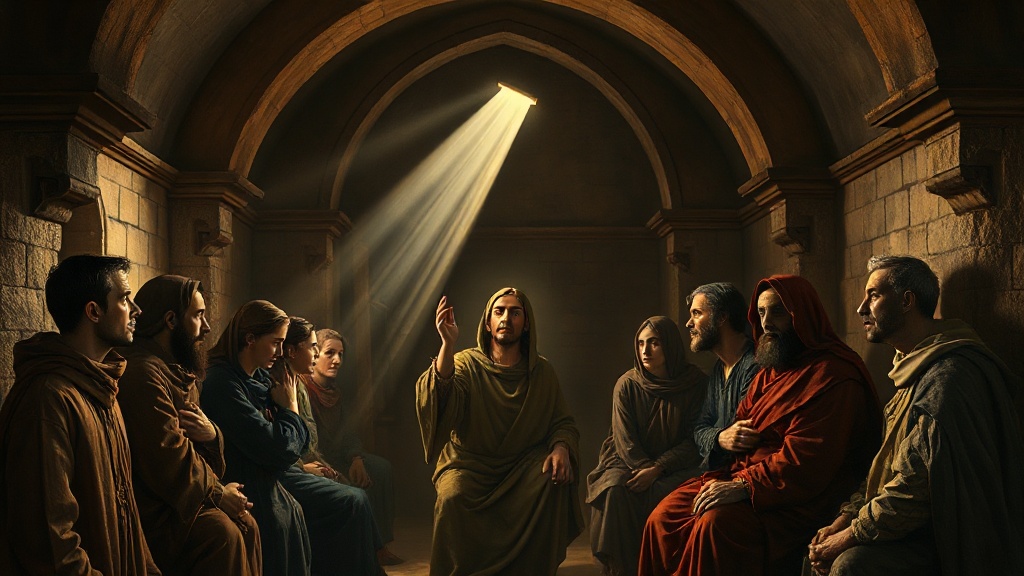
3. Fear, Darkness, and the Need for Discernment
Many occult stories succeed because they touch our deepest fears. They remind us that life is fragile, the future is uncertain, and evil is real. In that sense, such films can expose a truth that secular optimism sometimes hides: the world is not as safe or simple as we want it to be. But the believer must go further. The reality of evil does not mean evil is equal to God. Darkness is not a rival kingdom with equal strength; darkness is only darkness because it lacks light. This is why the Christian response is not fascination with evil, but confidence in the One who defeats evil. Discernment means we do not deny fear, yet we do not let fear govern us. It also means we listen carefully to what a story is doing inside us. Is it teaching us to be curious about evil, or to hate evil? Is it making darkness look powerful and God look distant, or is it reminding us that God remains sovereign even when the night feels deep? These are not small questions. They shape the kind of hearts we form through the stories we consume.
- Fear can reveal our vulnerability, but it should lead us to God.
- Darkness is not equal to light; it only borrows from what it opposes.
- Discernment asks what a story is forming inside us.

4. Christ Is Stronger Than Every Spirit
The heart of the Christian worldview is not fear, but victory. We do not deny that evil exists, but we also do not make evil the center of the story. Jesus Christ came into a broken and frightened world, and He confronted the powers of darkness with authority, truth, mercy, and holiness. He did not need theatrics to prove His power. His cross looked like weakness, but it became the place where sin and death were defeated. His resurrection declared that no evil, no curse, and no dead end has the final word. That is why believers can speak about occult themes without panic. We know the greater reality: the Lord reigns. This does not make us careless; it makes us steady. We are careful about what enters our minds, careful about what shapes our imagination, and careful about the spiritual messages hidden in popular culture. Yet our caution is not born from dread. It is born from belonging to Christ. When He is near, believers do not need to chase shadows. We can walk in the light, confess truth, pray with confidence, and keep our eyes fixed on the One who rules over every power and every age.
- Jesus does not merely defend against evil; He overcomes it.
- The cross and resurrection are the center of Christian hope.
- Believers can be calm because Christ’s authority is complete.
5. How Should Christians Respond in Everyday Life?
In daily life, the challenge is seldom dramatic. Most of the time, discernment happens quietly: in what we choose to watch, what we replay in our minds, what we laugh at, and what we excuse. Christians do not live by fear-based rules, but by wisdom. Some believers may decide they should avoid all occult-themed content; others may examine every case very carefully and conclude that they can watch with caution and spiritual maturity. The point is not to create pride or legalism. The point is to keep a tender conscience before God. A mature believer can ask: Will this strengthen my faith, or weaken my prayer? Will this feed fear, or deepen peace? Will this make evil seem ordinary? Will this help me love Christ more? These questions also apply to families, churches, and younger believers who may be especially impressionable. We should speak with grace, not harshness. We should teach with clarity, not alarmism. And above all, we should remember that spiritual maturity shows itself not in how much darkness we can endure, but in how faithfully we walk with God in ordinary life.
- Use wisdom, not panic, when choosing what to consume.
- Keep a tender conscience before God.
- Judge content by its effect on faith, peace, and holiness.
