A first summit between the leaders of South Korea and Ukraine opened space for direct dialogue.
The war in Ukraine is not only a military crisis but also a human crisis touching prisoners, refugees, and families.
The central question is how to treat North Korean prisoners in a way that honors human dignity.
The reported principle is to respect the free will of the people involved and seek a humanitarian solution.
For the church, this is a reminder that peace begins when we see people as persons, not as tools.
Mercy Before Power: A Christian Reflection on Prisoners, Freedom, and Peace in Time of War
Today we reflect on a serious public issue: the first summit between the President of the Republic of Korea and President Volodymyr Zelenskyy, and the question of how to handle North Korean prisoners in the war in Ukraine. This is not merely a diplomatic headline. It is a moral moment. In times of conflict, nations must make hard decisions, but believers are called to ask a deeper question: How do we honor the image of God in every human life, even amid war?
1. When the World Is Fractured, a Table Still Matters
The meeting in Ankara reminds us that even in a divided world, leaders still sit across a table and speak. Such meetings do not erase war, but they can prevent cruelty from having the final word. The Bible teaches that words matter, listening matters, and peace is not weakness. It is moral courage. A summit cannot solve every wound, yet it can open a door where hostility had shut one. For Christians, this image is meaningful: when people choose to speak rather than only to strike, they reflect a small but real glimpse of God’s desire for reconciliation.
- Dialogue is better than silence when human lives are at stake.
- Compassion does not cancel justice; it guides justice.
- Even in war, people are not disposable.
2. The Prisoner Is Still a Person
The issue at the center of this summit is the treatment of prisoners connected with the war. Article reports say that the leaders discussed a humanitarian solution that respects the free will of the people involved. This is crucial. A prisoner is not a thing. A prisoner is not a trophy. A prisoner is a human being, bearing wounds, fear, memory, and conscience. Scripture repeatedly warns us not to treat the vulnerable as mere means. Human dignity does not disappear at the border of conflict. Even when the law must be followed and security concerns remain real, the moral starting point must be mercy.
- Freedom of conscience should not be crushed by force.
- Humanitarian concern must accompany legal responsibility.
- Those held in war must never be reduced to political symbols.
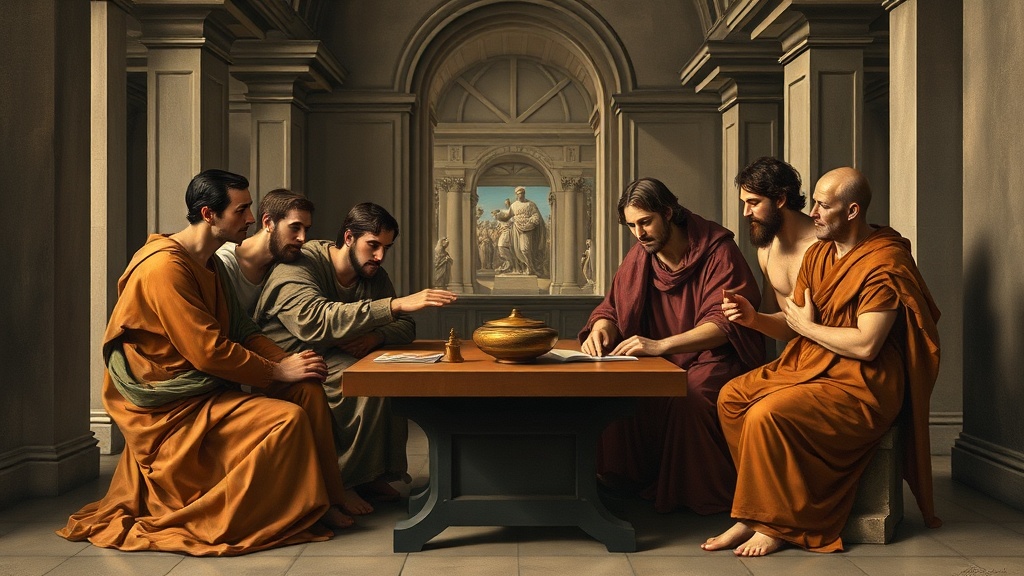
The church should be careful here. We should not speak casually about people whose lives are caught in a war we do not fully carry. We must pray for wisdom for governments, but also for the protection of conscience, the safety of the weak, and the healing of those who have been forced into terrible choices. The Lord who sees the sparrow also sees the prisoner.
3. Free Will Is a Sacred Word
The report emphasizes one principle again and again: respect for free will. That phrase matters deeply in Christian thought. God does not coerce love. He calls, He invites, He convicts, but He does not force the heart. In the same way, any humane approach to prisoners should avoid raw coercion and should carefully respect a person’s conscience and freedom where possible. This does not mean moral confusion; it means moral seriousness. It means we understand that a person’s inner life is not the property of a state, a military system, or a propaganda machine.
- Free will is part of the dignity of being human.
- Coercion may control behavior, but it cannot create truth.
- Respecting conscience is one mark of a civilized society.
We must be careful not to turn freedom into a slogan. Biblical freedom is not rebellion without limits; it is the chance to choose what is good, just, and true. That is why the reported humanitarian principle is so important. It tries to preserve the person, not merely manage the case. And in a world of pressure, fear, and war, that is a profoundly moral thing to do.

4. Peace Is Not Absence of Conflict Alone
Many people think peace means merely the absence of battle. But the Bible shows us a deeper peace. Peace is wholeness, justice, mercy, truth, and restored relationship. That is why a wartime summit about prisoners matters spiritually. It reveals whether nations can still recognize limits, dignity, and moral responsibility when fear is high. A society becomes less human when it forgets compassion in the name of strength. Yet a society begins to heal when it refuses to abandon the weak. True peace protects persons, not just interests.
- Justice without mercy becomes harshness.
- Mercy without truth becomes sentimentality.
- Biblical peace holds both together.
For the church, this means we pray beyond slogans. We pray for leaders to act wisely. We pray for prisoners to be treated humanely. We pray for families separated by war. We pray for those who must decide under pressure. And we pray that the Lord would keep us from hardening our hearts when we hear news from distant battlefields.
5. What the Church Should Say Today
What then should we say as believers? First, that every person is made in the image of God. Second, that war never gives us permission to forget mercy. Third, that freedom of conscience matters. Fourth, that the church must be a witness for peace, not a cheerleader for cruelty. We do not need to take sides with careless words. We need to take the side of truth, compassion, and human dignity. That is not weakness. That is faithfulness.
- Pray for leaders to govern with wisdom.
- Pray for the wounded, the detained, and the displaced.
- Pray that the strong will remember responsibility.
- Pray that human beings will never be treated as objects.
In a season when the world is tired of war, the gospel speaks with quiet power: God sees the forgotten, hears the suffering, and calls His people to walk humbly. The road of mercy is not always easy, but it is the road that preserves our humanity.
