A veteran’s life reminds us that peace is never free.
Honoring the dead is one way a nation keeps its memory alive.
The story of a daughter searching for her father becomes a call to gratitude.
National cemeteries are not only resting places, but places of remembrance.
Believers are invited to remember sacrifice with humility, thanks, and prayer.
Remembering a Father, Remembering a Nation
Today’s story begins with a family name, yet it quickly opens into a nation’s memory. The article title speaks of Lee Hye-young’s father, a man who fought in the Korean War and was laid to rest in the National Cemetery. Even with the limited material before us, one truth stands out clearly: this was not only a private family story, but also a public history of sacrifice, honor, and remembrance. In a world that often moves quickly past the older generation, the place of a veteran matters deeply. Many people enjoy the peace of today without fully knowing what was endured for it. That is why this subject calls us to slow down and give thanks.
- He was a Korean War veteran.
- He was honored with burial in a national cemetery.
- His daughter’s search became a moment of remembrance.
- His life connects a family to the larger history of the nation.
The Honor Hidden in Burial
When we hear the phrase National Cemetery, we are not thinking only about a burial place. We are thinking about a nation’s public decision to remember. To be laid there is to be acknowledged as one who served beyond self, one whose life became part of a shared debt of gratitude. In Scripture, names matter, memory matters, and burial carries meaning. Abraham cared for a burial place with dignity; Joseph’s bones were carried with hope; and even the grieving women of the Gospels came to a tomb with devotion. In a similar way, the resting place of a veteran speaks quietly but powerfully: this life was not forgotten by God’s providence, nor should it be forgotten by people.
- Burial can be a testimony of honor.
- National memory helps guard against forgetting.
- Respect for the dead shapes the conscience of the living.
- A grave can become a place of prayer, thanksgiving, and sober reflection.
For the church, this is not about political persuasion. It is about a moral posture: we honor those who gave of themselves. We also remember that peace has a cost. The older generation carried dangers we did not face, and their sacrifice should not be reduced to a line in a news story. Their burial in a national cemetery reminds us that the nation itself knows it owes them a debt.
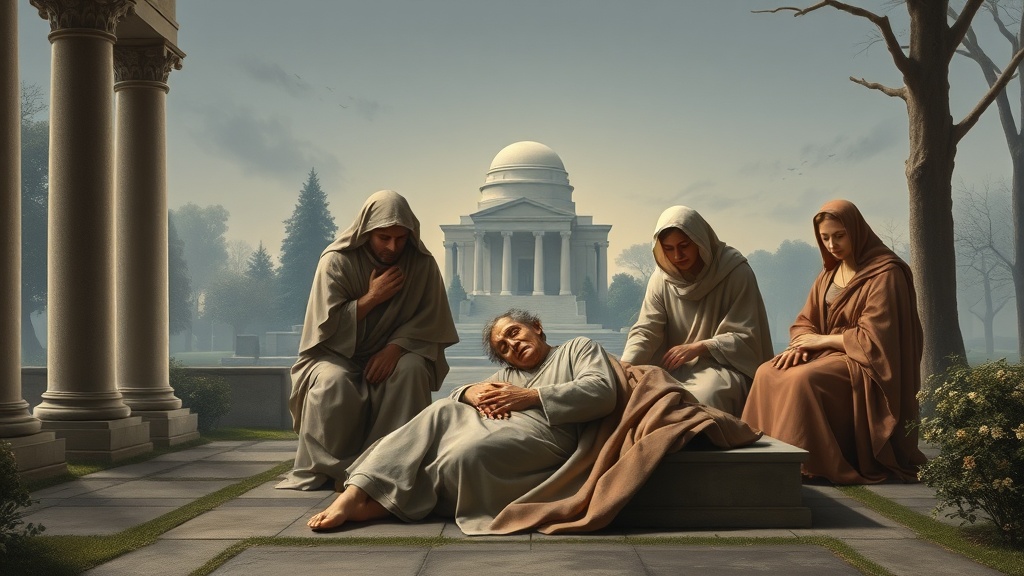
A Daughter’s Search and the Healing of Memory
The image note says that the actress found her deceased father. That detail touches the heart because many families carry questions after a loved one has gone: Where did they serve? What did they endure? How should we now remember them? Such questions are not merely sentimental. They are part of memory being restored. Sometimes a person’s life is known to the public only in fragments, and a child later discovers what grace and burden their parent carried. In this way, the daughter’s search becomes an act of love, but also an act of truth. She does not create the story; she receives it. She does not invent the honor; she acknowledges it.
- Family memory can preserve what history might overlook.
- Searching for a parent’s story is an act of reverence.
- Truth and gratitude belong together.
- Healing often begins when we finally name what was given to us.
We should pause here and remember that many surviving families live with silent pride and silent sorrow. Their loved ones served, suffered, and disappeared into the flow of time. Yet God does not despise hidden sacrifice. The Lord sees what people forget. The Lord remembers what archives cannot fully hold. Therefore, when a daughter discovers her father’s place in history, it is more than a personal moment. It is a small restoration of justice.

What Scripture Teaches About Gratitude and Honor
The Bible repeatedly teaches God’s people to remember rightly. Israel was told to keep feast days, build memorials, speak of God’s deeds to the next generation, and not forget the works of the Lord. This same spiritual discipline can shape how we think about veterans and national servants. We do not worship human achievement, but we do give honor where honor is due. We do not confuse earthly service with salvation, but we do recognize that sacrificial service reflects something of God’s own heart. The Lord Jesus Himself said that greater love has no one than this, that someone lay down his life for his friends. That is not a verse about war alone, but it does help us understand the beauty of self-giving love.
- Gratitude is a spiritual discipline.
- Honor is not pride; it is proper recognition.
- Memory protects a society from moral amnesia.
- Peace becomes more precious when sacrifice is remembered.
For older believers especially, this kind of remembrance can be deeply meaningful. Many in our congregations remember the hardships of war, separation, hunger, loss, and rebuilding. Others grew up in the shadow of those stories. When we speak of a veteran’s burial in the National Cemetery, we are speaking to real tears, real scars, and real gratitude. We are also speaking to children and grandchildren who must learn that freedom and peace are never ordinary gifts. They are gifts to be received with humility.
A Gentle Call to the Living
So what should we do with this story today? First, we should remember. Not every sacrifice is visible, and not every hero seeks attention. Second, we should give thanks: in prayer, in conversation, in family storytelling, and in public respect. Third, we should teach the next generation that the nation’s peace was purchased at a cost. Fourth, we should let this remembrance shape our character. If we truly honor the dead, then we will be slower to despise others, slower to take peace for granted, and quicker to care for those who carry grief.
- Remember the veteran.
- Thank God for peace.
- Teach children to honor sacrifice.
- Live with humility and compassion.
In the end, the story of Lee Hye-young’s father is not only about a famous daughter or a public article. It is about a man who served, a family that remembers, and a country that should pause and say, “We do not forget.” Such words are fitting because they reflect a deeper truth: God does not forget faithful labor, and His people should not either. May our hearts remain tender toward those who gave much, and may our gratitude become as lasting as the memory we wish to preserve.
